YØGA deal in pure sound, delivered in bursts of confusion and terror. The duo of Vatten Häst and Eld Anka don't give us much to go on, aside from the sound. The credits in the CD are minimal: no producer, no studio, no equipment lists, no thank yous to everyone they met on the road. Obscurity adds to the intrigue. Megafauna comprises 12 roiling vortexes of synths, guitars, drums and noise, swirling with soot and scattering debris across fields of sonic loathing. It’s like Darkthrone lighting incense and blissing out with Popol Vuh, with Kevin Shields mixing the results. The song titles reference a flying witch, the hidden people, a treeman, a warrior, the dreaded chupacabra. YØGA drag us down onto the mouldy earth, cowering from misshapen things glimpsed amidst the trees. Sometimes a riff works its way up from the mire—the martial doom theme of “Treeman” is especially strong—but when it does, the atmospheres over top threaten to snuff it out. No clean sounds exist on Megafauna. Everything is filthy, perverted beyond its natural resonance and oscillating out of control. Each track is its own little world—all fearful, haunted places—and the flow within each one demonstrates YØGA’s consideration for composition. Chaos resides on the surface, yet all is controlled inside. Sick minds are clearly at work, and I hope they're well stocked with ideas. I want to hear where they go next.
Friday, March 19, 2010
YØGA—Megafauna (Holy Mountain)
YØGA deal in pure sound, delivered in bursts of confusion and terror. The duo of Vatten Häst and Eld Anka don't give us much to go on, aside from the sound. The credits in the CD are minimal: no producer, no studio, no equipment lists, no thank yous to everyone they met on the road. Obscurity adds to the intrigue. Megafauna comprises 12 roiling vortexes of synths, guitars, drums and noise, swirling with soot and scattering debris across fields of sonic loathing. It’s like Darkthrone lighting incense and blissing out with Popol Vuh, with Kevin Shields mixing the results. The song titles reference a flying witch, the hidden people, a treeman, a warrior, the dreaded chupacabra. YØGA drag us down onto the mouldy earth, cowering from misshapen things glimpsed amidst the trees. Sometimes a riff works its way up from the mire—the martial doom theme of “Treeman” is especially strong—but when it does, the atmospheres over top threaten to snuff it out. No clean sounds exist on Megafauna. Everything is filthy, perverted beyond its natural resonance and oscillating out of control. Each track is its own little world—all fearful, haunted places—and the flow within each one demonstrates YØGA’s consideration for composition. Chaos resides on the surface, yet all is controlled inside. Sick minds are clearly at work, and I hope they're well stocked with ideas. I want to hear where they go next.

Thursday, March 11, 2010
Wednesday, March 03, 2010
Cheer-Accident—Fear Draws Misfortune (Cuneiform)
Me: Hey, honey, I have the latest album from Cheer-Accident here. They got their name from a category of greeting cards. Mind if I put it on?
Wife: Be my guest, Mule.
(I fire up the CD player and “Sun Dies” begins playing)
Wife: (laughing) What the hell, Mule?
Me: Jesus, it sounds like Gentle Giant throwing up. Sorry.
 Chicago’s Cheer-Accident thrive on absurdity and perversity. Nothing travels in a straight line. Their songs bend, snap, fall over, bounce back. They’re like Thinking Plague’s drunken uncle, spilling beer, cracking wise, and hogging the stereo at family gatherings with way-out records selected just for the occasion. As Cuneiform puts it, “Recommended if you like: Art Bears, The Association, Faust, Magma, Nomeansno, Steve Reich, Shudder to Think, Sleepytime Gorilla Museum, This Heat, Time of Orchids. Playing simultaneously.”
Which is true and not true. Yes, they sound like a clustercuss at times, but they’re also capable of great beauty, and they never stop being fun. A trio at its core (all three members write), Cheer-Accident includes an impressive cast of vocalists and brass and wind players on Fear Draws Misfortune. It’s impossible not to get caught up in the melee when everyone gets going. The songs (and despite the chaos, these do feel like songs) sometimes bleed and segue neatly into one another, just in case you weren’t disoriented enough. Although the whole album is terrific, there are some standout tracks. “According to the Spiral” is a languid little gem that glides on an elusive rhythm, while “Blue Cheadle” is a compelling jumble. “Humanizing the Distance” traverses several movements and constantly shifting arrangements to unwind with the entire band playing a lovely extended riff that dissipates to a single guitar. The song heaves a great sigh. Beware of “The Carnal, Garish City,” however—I just have no idea. Are they singing in French? Is that supposed to be duck? You’re on your own with this one.
The band are stingy with the lyrics and other mystery-busting documentation, so I don’t know what it all means, but I’m on board nevertheless. I’ll champion them and take them to my breast as though I were comforting an orphaned porcupine. They’re lovable and cute, but those quills can be a bitch.
Wife: Be my guest, Mule.
(I fire up the CD player and “Sun Dies” begins playing)
Wife: (laughing) What the hell, Mule?
Me: Jesus, it sounds like Gentle Giant throwing up. Sorry.
 Chicago’s Cheer-Accident thrive on absurdity and perversity. Nothing travels in a straight line. Their songs bend, snap, fall over, bounce back. They’re like Thinking Plague’s drunken uncle, spilling beer, cracking wise, and hogging the stereo at family gatherings with way-out records selected just for the occasion. As Cuneiform puts it, “Recommended if you like: Art Bears, The Association, Faust, Magma, Nomeansno, Steve Reich, Shudder to Think, Sleepytime Gorilla Museum, This Heat, Time of Orchids. Playing simultaneously.”
Which is true and not true. Yes, they sound like a clustercuss at times, but they’re also capable of great beauty, and they never stop being fun. A trio at its core (all three members write), Cheer-Accident includes an impressive cast of vocalists and brass and wind players on Fear Draws Misfortune. It’s impossible not to get caught up in the melee when everyone gets going. The songs (and despite the chaos, these do feel like songs) sometimes bleed and segue neatly into one another, just in case you weren’t disoriented enough. Although the whole album is terrific, there are some standout tracks. “According to the Spiral” is a languid little gem that glides on an elusive rhythm, while “Blue Cheadle” is a compelling jumble. “Humanizing the Distance” traverses several movements and constantly shifting arrangements to unwind with the entire band playing a lovely extended riff that dissipates to a single guitar. The song heaves a great sigh. Beware of “The Carnal, Garish City,” however—I just have no idea. Are they singing in French? Is that supposed to be duck? You’re on your own with this one.
The band are stingy with the lyrics and other mystery-busting documentation, so I don’t know what it all means, but I’m on board nevertheless. I’ll champion them and take them to my breast as though I were comforting an orphaned porcupine. They’re lovable and cute, but those quills can be a bitch.
Tuesday, March 02, 2010
Rotting Christ —Aealo (Season of Mist)
 Rotting Christ’s basic sound is extremely masculine, even by metal standards. It’s precise and regimented. The band is in lock step and fit to fight. Even when they bring in contrasting elements, like reed pipes or female vocals, their warrior stance doesn’t flinch at all. The vibe on Aealo is inclusive— “Come, do battle with us. Together we are stronger.”
The opening title track is a mad rush of sound that reminds me of Hüsker Dü’s "New Day Rising" with its four-on-the-floor momentum. The wailing female voices add a disorienting twist that transforms the track into something truly novel. Above all, no matter how elegantly they’re constructed and adorned, songs like “Eon Aenaos” are catchy. Every last detail has been honed, right down to the guitar solos, which show some serious time invested in composing them rather than being tossed off to fill obligatory solo space. It’s impressive that the guitars are frequently playing three or four different lines at once, yet nothing is lost or muddled. I wouldn’t accuse Rotting Christ of “grooving,” but when they hook up the wah-wah pedal on “Demonon Vrosis” it’s hard not to get ensnared by the rhythms they lock into. “Noctis Era” is the album's ultimate anthem, with its Celtic-sounding guitar harmonies (you could play them on a tin whistle) mixing with band leader Sakis’ desperate screaming and “hoo! ha!” gang chants in the background. The guitar riffs are so simple that a beginner could pick them up. This all may sound like it’s a dumbed down play for accessibility, but there’s nothing dumb about it.
Guests contribute to the Rotting Christ arsenal. As co-vocalist on “Thou Art Lord,” Alan Nemtheanga is in his element. The track is the sort of battle-ready, passionate metal that his band Primordial trades in. Nemtheanga’s commanding voice provides a nice foil to Sakis’ rasp, making the track an album highlight. Diamanda Galas adds half-spoken vocals to a metal arrangement of her own “Orders from the Dead.” Some listeners may be turned off by her domineering incantations; others may find the track an impressive, imposing album closer.
I’ve never followed Rotting Christ’s career too closely, but I’ve gained a new appreciation of them via Aealo. Their eleventh release is a superb piece of work full of deadly intent, craft, and a cunning mix of elements, and I’d believe anyone who says it’s their best album to date.
Monday, February 22, 2010
Sunday, January 31, 2010
Tatsumaki: Voivod Japan 2008 DVD
When the final conflagration is extinguished, the only things to survive will be cockroaches and Voivod.
The Tatsumaki DVD demonstrates that Voivod can withstand any calamity and charge into new territory like the Korgull of old. My review is here at hellbound.ca.
The Tatsumaki DVD demonstrates that Voivod can withstand any calamity and charge into new territory like the Korgull of old. My review is here at hellbound.ca.
Thursday, January 21, 2010
A Difficult 2009, 5 to 1
5. Cobalt—Gin (Profound Lore) “This record is a springboard to fuck the universe.” With a statement like that, plus a dedication to Ernest Hemingway and Hunter S. Thompson, Cobalt’s deadly intent is obvious. They pull it off, too, with an approach that mixes black metal with churning, tribal rhythms derived from Neurosis and Tool. Gin is cunning, electrifying, and unnerving. In the building climax to “Two-Thumbed Fist,” instrumentalist Erik Wunder carefully layers speed and chaos until the whole thing threatens to fly apart. Wunder’s music for Cobalt has the organic feel of a great band. Gin’s razor-wire sonics are entwined with vocalist Sgt. Phil McSorley’s experiences in the Middle East. I hear centuries of hate and sudden violence. This, I’m afraid, is World Music.

4. Astra—The Weirding (Rise Above) The prog is dank and dingy, and everything (including the band members, I assume) belches smoke. Review here.

3. Mastodon—Crack the Skye (Reprise) More concept, less filler. Of all the albums I heard this year, I had to jump the biggest chasm from dismay to delight with this one. Review here.

2. Converge—Axe to Fall (Epitaph) Converge are simply a great rock band. They push and pull in all directions over the course of Axe to Fall because they can, and because they’d get bored otherwise. From deathly grind to noise rock to whatever the gothic waltz of “Cruel Bloom” represents, it all sounds utterly true to Converge. You gotta hear these guys play.


Tuesday, January 12, 2010
A Difficult 2009, 10 to 6
10. Zombi—Spirit Animal (Relapse) If Steve Moore and A. E. Paterra were a lot older and sexed up their sound with a little more disco, they could have been “big in Germany” just like Saga in the early ’80s. Their music is stern and exacting. I admire the purity of their vision and the quality of their execution. They also offer the simple pleasure of hearing two guys play their asses off. Like SUNN O))), they started with an obvious source of inspiration and moved on to define their own sound. This latest round of planetarium rock is their best yet.

9. Present—Barbaro (ma non troppo) (Ad Hoc) Although the studio half of this CD/DVD release is a bit stingy, the package as a whole is a stunner. Review here.

8. Woods of Ypres—IV: The Green Album (Practical Art) Another compelling heavy metal confessional from Ontario’s “ex-black/now-doom and anything else you want to call it" metallists. Review here.

7. Six Organs of Admittance—RTZ (Drag City) I feel like a cheat including this compilation of old and rare SOoA material, but it did come out last year and it did give me a new perspective on Ben Chasny’s remarkable art. Review here.

6. Yob—The Great Cessation (Profound Lore) Yob’s mighty comeback saw them stripping down and stretching out, feeding off their well-justified anger and crushing everything. Review here.

Saturday, January 09, 2010
A Difficult 2009, 15 to 11
15. Voivod—Infini (Sonic Unyon) While it's sad that this is the end of the road for Voivod, Infini was a strong record on which to bow out. Katorz was kind of a "proof of concept" release; it must have been an ordeal for the surviving Voivod members to bring Piggy's last riffs to fruition. On Infini the band sounds much more at ease working with their late guitarist's final recordings, and although there are a couple duds, the album as a whole is appreciably better than Katorz.

14. Gates of Slumber—Hymns of Blood and Thunder (Rise Above) Review here.

13. IQ—Frequency (InsideOut) Review here.

12. Led Bib—Sensible Shoes (Cuneiform) My wife zeroed in on this at Dr Disc in Hamilton and told me I should buy it. My wife is a genius. This London jazz-rock quintet have laid down a scorcher of a album—nothing sensible about it. Mixing infectious themes with all-out skronk, it always threatens to blow the roof off the joint.

11. The Decemberists—The Hazards of Love (Capitol) I had to live with this album for a while, but I eventually discovered that The Hazards of Love is start-to-finish great. They ratcheted up the progressive tendencies of The Crane Wife for this concept album/song cycle/rock opera/ whateverthehell. The big riffs and keyboard solos take stabs at Heep/Tull rock majesty, but fall a bit short—they're so polite. I like them as they are, though. I appreciate the intent. The songs stand together well, the reprises fall where they should, and Shara Worden's turn as The Queen is spectacular.

(None of these records make any sense together.)
Thursday, January 07, 2010
A Difficult 2009, 20 to 16
20. Litmus—Aurora (Rise Above) Space rituals for the information age. Review here.

19. Baroness—The Blue Record (Relapse) I’m not a production Nazi, but the snare sound on The Blue Record drives me nuts. Smack-smack-smack. Baroness are still a brilliant band, and The Blue Record shows them developing their songwriting and guitar harmonies to manic new heights. If Chuck (Stairway to Hell) Eddy is still obsessing over metal/disco fusion, he’d love this—it shakes and grooves like no other metal album this year. If only the backbeat didn’t grate on me so much...

18. Firebird—Grand Union (Rise Above) Bill Steer is still the coolest. Review here.

17. SUNN O)))—Monoliths and Dimensions (Southern Lord) I bought Earth 2 ’round the year punk broke, so I didn’t see much point in getting into SUNN O))) when they droned to life in 1999. The press for Monoliths and Dimensions was so persuasive, however, that I went for it the day it was released. While I can take or leave Attila Csihar’s contributions, “Big Church,” with its choir arrangements (inspired by guest guitarist Dylan Carlson of Earth), and the majestically orchestrated “Alice” took drone to new and ingenious realms. The latter was one of the best pieces of music I heard all year.

16. Sonic Youth—The Eternal (Matador) A similar case to Clutch here: a band with a string of great albums through the 2000s (Murray Street especially), switching labels (retreating from Geffen to Matador), and dropping a non-core member (Jim O’Rourke, replaced by Mark Ibold). Like Clutch, Sonic Youth just did their thing in 2009. The Eternal took a while to warm up to, but I couldn't help but feel at home with those familiar Moore/Ranaldo guitar conversations and songs like “Antenna” and Ranaldo’s kick-ass “What We Know” that rang with confidence and artistry. Funny; I won’t run out for Rush or Neil Young every time, but I’ll do it for Sonic Youth, and never regret it.


19. Baroness—The Blue Record (Relapse) I’m not a production Nazi, but the snare sound on The Blue Record drives me nuts. Smack-smack-smack. Baroness are still a brilliant band, and The Blue Record shows them developing their songwriting and guitar harmonies to manic new heights. If Chuck (Stairway to Hell) Eddy is still obsessing over metal/disco fusion, he’d love this—it shakes and grooves like no other metal album this year. If only the backbeat didn’t grate on me so much...

18. Firebird—Grand Union (Rise Above) Bill Steer is still the coolest. Review here.

17. SUNN O)))—Monoliths and Dimensions (Southern Lord) I bought Earth 2 ’round the year punk broke, so I didn’t see much point in getting into SUNN O))) when they droned to life in 1999. The press for Monoliths and Dimensions was so persuasive, however, that I went for it the day it was released. While I can take or leave Attila Csihar’s contributions, “Big Church,” with its choir arrangements (inspired by guest guitarist Dylan Carlson of Earth), and the majestically orchestrated “Alice” took drone to new and ingenious realms. The latter was one of the best pieces of music I heard all year.

16. Sonic Youth—The Eternal (Matador) A similar case to Clutch here: a band with a string of great albums through the 2000s (Murray Street especially), switching labels (retreating from Geffen to Matador), and dropping a non-core member (Jim O’Rourke, replaced by Mark Ibold). Like Clutch, Sonic Youth just did their thing in 2009. The Eternal took a while to warm up to, but I couldn't help but feel at home with those familiar Moore/Ranaldo guitar conversations and songs like “Antenna” and Ranaldo’s kick-ass “What We Know” that rang with confidence and artistry. Funny; I won’t run out for Rush or Neil Young every time, but I’ll do it for Sonic Youth, and never regret it.

Wednesday, January 06, 2010
A Difficult 2009, 25 to 21
25. Shrinebuilder—s/t (Neurot) The advance word on the Shrinebuilder sessions (almost a year ago this week!) was that something really special had gone down between Crover, Wino, Cisneros and Kelly. The hype turns out to be reality, as Shrinebuilder delivers a perfect blend of all the participants’ bands. Sounds like everybody brought riffs to the table and put some serious thought into piecing them together. This was the holy mountain for stoner/doom fans this year.

24. Makajodama—s/t (Laser’s Edge) The archetypal “stunning debut” from this Swedish instrumental outfit that bridges Canterbury and Krautrock and post-rock (an increasingly useless label that I’m beginning to despise), creating a tasteful-yet-rambunctious sound that time travels somewhere between 1969 and 2009.

23. Clutch—Strange Cousins from the West (Weathermaker) After releasing a raft of killer albums last decade, Clutch were rewarded by having their record company go tits up. Clutch still have a full tank of gas, though. They dropped the keyboards that threatened to turn them into a jam band, especially in a live setting. Strange Cousins... is back to basics while still honing that heavy blues style they’ve pursued since Blast Tyrant. “50,000 Unstoppable Watts” should find a place in the set list from here on in.

22. Kylesa—Static Tensions (Prosthetic) Warpig had a number called “Melody With Balls,” which is a daft title (hey, it was 1970), but the phrase sums up the last Kylesa album very well. Review here.

21. Upsilon Acrux—Radian Futura (Cuneiform) I remember seeing (probably in a mid-70s vintage World Book “Science Year” volume) a picture of a web spun by a spider on LSD. That’s how I visualize Upsilon Acrux songs...at first. After many listens all the micro-sections start to flow together into a logical whole. It’s still pretty twisted logic, mind you, and I’m sure Radian Futura, with its half-hour centrepiece "Transparent Seas (Radio Edit)," will always be a challenging listen. Someday I’d like to figure it all out, but right now I treasure my job, my 6 to 7 hours of nightly sleep, eating, and being married.


24. Makajodama—s/t (Laser’s Edge) The archetypal “stunning debut” from this Swedish instrumental outfit that bridges Canterbury and Krautrock and post-rock (an increasingly useless label that I’m beginning to despise), creating a tasteful-yet-rambunctious sound that time travels somewhere between 1969 and 2009.

23. Clutch—Strange Cousins from the West (Weathermaker) After releasing a raft of killer albums last decade, Clutch were rewarded by having their record company go tits up. Clutch still have a full tank of gas, though. They dropped the keyboards that threatened to turn them into a jam band, especially in a live setting. Strange Cousins... is back to basics while still honing that heavy blues style they’ve pursued since Blast Tyrant. “50,000 Unstoppable Watts” should find a place in the set list from here on in.

22. Kylesa—Static Tensions (Prosthetic) Warpig had a number called “Melody With Balls,” which is a daft title (hey, it was 1970), but the phrase sums up the last Kylesa album very well. Review here.

21. Upsilon Acrux—Radian Futura (Cuneiform) I remember seeing (probably in a mid-70s vintage World Book “Science Year” volume) a picture of a web spun by a spider on LSD. That’s how I visualize Upsilon Acrux songs...at first. After many listens all the micro-sections start to flow together into a logical whole. It’s still pretty twisted logic, mind you, and I’m sure Radian Futura, with its half-hour centrepiece "Transparent Seas (Radio Edit)," will always be a challenging listen. Someday I’d like to figure it all out, but right now I treasure my job, my 6 to 7 hours of nightly sleep, eating, and being married.

Tuesday, January 05, 2010
A Difficult 2009, Part 1
2009 was full of personal trauma and anxiety, yet in the aftermath of every loss or near-loss, there was a quiet zone where I found more time than ever—or maybe I made more time—to pursue music. As always, music is the best.
One effect of the demise of Unrestrained! magazine was that I dropped off the promo gravy train. My mailbox sighed in relief. A lot of guilt lifted as well. I concentrated on writing about music that I actively sought out, researched, and acquired. Without the expectation of advance promos, I tracked release dates and awaited new albums the way I did in the years before this blog. I had fun just being a fan again.
For my year-end round-up, I’ll borrow Metal Mark’s approach and dole out my top 25 list five at a time. But first, I want to acknowledge ten albums that didn’t make the list for various reasons. They’re all excellent records, but through inattention or other factors they never became a vital part of my life for a significant stretch of the year.
35. Eagle Twin—The Unkindness of Crows (Southern Lord) Difficult jazz/sludge from Gentry Densley of Iceburn and Ascend (whom I covered in 2008). The writing and playing on this album is organic and human, but requires further study. My fault for buying it on vinyl, preventing me from listening to it at work. Throw us a download coupon, Southern Lord.

34. Katatonia—Night is the New Day (Peaceville) I didn’t find this to be the masterwork that Mikael Akerfeldt promised, but more of the same from Katatonia is never bad. The ultimate katatonia album should render me a blubbering mess; Last Fair Deal Gone Down is still the one to set the lower lip quivering.

33. Novembers Doom—Into Night's Requiem Infernal (The End) After the fantastic The Novella Reservoir, this album saw Novembers Doom holding steady with the expected mix of fist-clenching doom and forlorn ballads. Seeing them live in Calgary was a highlight of 2009.

32. Slough Feg—Ape Uprising (Cruz del Sur) I liked this much better than what I’d heard from Hardworlder. In fact it’s a gas, a good old-fashioned party record with surplus wit and style. Unfortunately I didn’t party much this year.

31. The Opium Cartel—Night Blooms (Termo) I regret that i didn’t review this properly, but I missed my window of opportunity when the sun was out this summer and this record’s sparkling pop-prog made perfect sense.

30. OM—God is Good (Drag City) There’s no space like OM. It was high time for OM to branch out a bit, and with new drummer Emil Amos on board, God is Good was the perfect chance. They were partially successful on side two, but my initial rush of discovering OM a couple years ago had worn off, leaving me to think that side one was more of the same old thing.

29. Ancestors—Of Sound Mind (Tee Pee) I’m still trying to figure out if this sprawling doom psych successor to Neptune With Fire has any tunes on it. I’m really pulling for it, though.

28. Six Organs of Admittance—Luminous Night (Drag City) It’s Ben Chasny’s fault for releasing two major Six Organs of Admittance albums this year. The first one, RTZ, grabbed all the attention back in February. This album gets played increasingly often, and its bleak songs are slowly winning me over.

27. Steven Wilson—Insurgentes (kscope) This album made a nice change from Wilson’s increasingly predictable work with Porcupine Tree, but it hasn’t had much staying power after I posted my review.

26. PJ Harvey & John Parish—A Woman a Man Walked By (Island) Finally a follow-up to Dance Hall at Louse Point and again it’s fascinating to hear PJH in collaborative mode, wringing songs of beauty, dark humour, and outright horror from Parish’s prickly guitar constructions.

Friday, December 18, 2009
Woods of Ypres—Woods 4: The Green Album (Practical Art)
 Woods of Ypres do things that metal bands are not supposed to do. Head songwriter David Gold writes in the first person, but doesn't indulge in any role playing. He battles inner demons, not supernatural entities. The lyrics encompass vulnerability and longing as well as anger—the latter arises out of the former. Musically, Woods tackles several genres within a single album, which is refreshing in a time when bands rewrite the same song 10 times and call it an album.
Woods 4 includes some "Peaceville 3"-style doom, some melodic, mid-paced Katatonia/Amorphis rockers, some orchestrated piano-and-strings sections, some blasting BM and DM bits, and a couple hammer-headed sludge tunes. So although the band's PR material labels their sound as black and doom, listeners looking for an earful of one or the other will come away unfulfilled. But for those who want variety and regard scene policing with contempt, Woods have delivered another enjoyable and highly successful album.
Thematically, the album that Woods 4 most reminds me of is Marillion’s Misplaced Childhood. Both albums begin with the death of a relationship and chronicle the personal journey that follows. In Marillion’s case, vocalist Fish loses himself in backstage debauchery and in various identity crises provoked by the touring life. For David Gold, the post-breakup journey is just that: he takes an opportunity to travel abroad (“Dive into exile!” as “Dirty Window of Opportunity” puts it), and deals with isolation and regret while finding a new life in South Korea.
Musically the band covers more ground than ever. The variety of the material is necessary to sustain the listener’s interest for a 78-minute album. The sequencing of songs helps as well. There are breaks between tracks (unlike Misplaced Childhood), but after a few listens to the entire album, I started hearing the songs as a series of suites. The opening of the album is consumed with gloom and sadness, and the tempos reflect this. The doom is quite My Dying Bridal on “Everything I Touch Turns to Gold (then to coal)”, with Gold's “whoa-oh-oh”s standing in for MDB’s violin lines. The opening movement ends with “I Was Buried in Mount Pleasant Cemetery" (Gold’s favourite titling theme has a rhyming scheme) and the narrator's figurative death before he assumes a new identity as a single man in a foreign land. The most intriguing stretch of songs lies at the heart of the running order, from “Wet Leather” (the album's most immediately catchy song), “Suicide Cargoload” and “Halves and Quarters” (two brief but heavy rockers) and “You Are Here With Me (in this sequence of dreams)” a lullaby/lament with instrumentation by Musk Ox. This is where the album's depth and variety is really evident.
With all this going on, the album works it way from the personal to the universal, from the opening scene of a breakup to the closing track’s call for a tenuous truce between sexes: “Women move on. Men move on.” Tellingly, this is where the voice switching to the 2nd person, as if to impart some hard-fought wisdom to the listener. This song—"Move On! (the woman will always leave the man)"—also invokes the seasons, a nice reference to the themes from previous Woods releases.
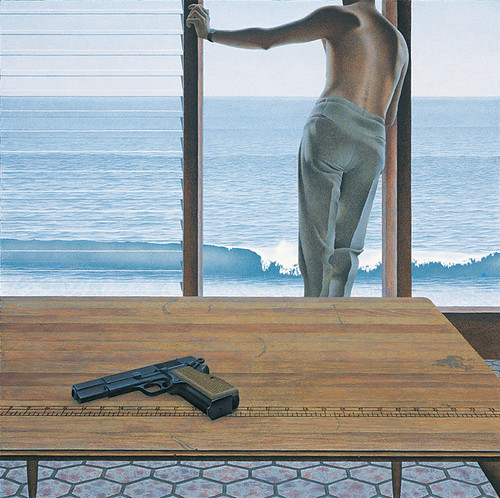
Woods of Ypres have outdone themselves with this album, and again have demonstrated that metal doesn't have to be purely a vehicle for escapism. The plain-spoken nature of Gold's lyrics might throw some people off, but for me, Gold's words and images paint vivid, precise pictures. Each song is like a heavy metal Alex Colville painting, a scene revealed in unforgiving, relentless light.
Thursday, December 10, 2009
Bedlam from Belgium
A lot of the music I listen to comes from a dark place. I’ll lap up the guttural, gut-bursting fury of Suffocation, the blood-caked emotion of Neurosis, or Deathspell Omega’s dissonant, Dantean hymns and gladly return for more. But when it comes to true Musica in Diabolus, none of them are fit to touch the grim robes of legendary Belgian chamber rock/Rock In Opposition bands Univers Zero and Present. A lot of prog bands describe graceful arcs with their music. The Belgians slash and stab, grind and jab. I have no idea how music like this gets made. Sacrifice, poverty and hunger play a large role, I’m sure...plus a buttload of rehearsal. Why doesn’t every kid who’s forced into piano lessons just flip out at age 17 and start making music like this? If I was a bitter child prodigy, with classical chops and a hate-on for mumsy and papa, that’s where I would have gone.
Univers Zero is led by drummer Daniel Denis; Present’s leader is guitarist Roger Trigaux, who was in Univers Zero for their first two albums. Each band reflects its leader’s instrument. Univers Zero’s music is abrupt and choppy, with riffs that sound like they’re based on drum rudiments. Present trolls similar dank, stony chambers, with the guitars of Roger Trigaux and his son Reginald providing additional menace. Both bands have monster drummers. In a genre where the standard was set by Christian Vander and Magma, it’s a must. Denis (who actually joined Magma briefly in the early ’70s) combines a free-flying Art Blakey and Keith Moon approach with a classical percussionist's discipline. Present’s Dave Kerman hits even harder—he’s a big fan of Gaza and other types of grind madness—yet he matches Denis’s orchestral approach in playing the entire kit at all times.
Univers Zero—Relaps: Archives 1984–1986 (Cuneiform)

Relaps collects Univers Zero live recordings from a difficult time in the band’s history, as documented in the liner notes. Although line-up changes and financial woes put the band’s existence in jeopardy, the eight tracks featured are bombastic and fierce—the sound of a band driven to survive by destroying all comers. For the sake of my nervous system, I hope I don’t hear anything more intense than the version of “The Funeral Plain” heard here. The extended ostinado solo section that sees Jean-Luc Plouvier and his demented DX7 work handing off to Michel Delory’s equally sadistic guitar solo is audio terrorism at its finest. It’s surprising to hear the audience applauding at the end, and realize that UZ hadn’t rendered the crowd into clumps of bubbling goo at Belgium’s Centre Culturel de Seraing that night. Some people evidently survived.
After this period and a final studio album (Heatwave), Denis retired the band until 1999's The Hard Quest.

Univers Zero: Evil Incarnate
Present—Barbaro (ma non troppo) (Ad Hoc)

Present took a similar path to UZ, releasing two albums in the early ‘80s before resurfacing with Certitudes in 1998. Their latest, Barbaro (ma non troppo), is a two disc set comprising three new studio recordings (44 minutes) and a DVD with nearly three hours of performances from 1994 to 2007. The new music is stunning. “Vertiges” is a 16-minute labyrinth of percussive insanity—pianist Pierre Chevalier hammers the piano like a man possessed—that builds to a couple climaxes. You might think they’ve given everything they had at the 9:30 mark, but wait, there's more to come. Chevalier’s “A Last Drop” has more of a sustained groove—albeit an off-kilter, juddering sort of groove—before it drops into a tension-building section that almost sounds pleasant and achievable by mere mortals. The final track is a little bit special in that it’s a remake of Trigaux and Denis’ “Jack the Ripper” from Univers Zero’s malevolent 1979 masterwork, Heresie. The older version was shrouded in the murk of a London fog; this new one gleams and flashes like a knife blade.
The DVD portion is just as alarming. The primary footage is well shot and edited, with the musicians’ craft as the main focus. Present in concert isn’t a heads-down noodle-fest, though. They do have a flair for the theatric. Witness the stern, gaunt figure of Roger Trigaux conducting the band through the first half of “Promenade au fond d’un Canal” like he’s casting spells. Cringe at the shirtless war-painted guy who takes centre stage to pound out time on a pipe. Thrill to Trigaux smashing his guitar at the end of “Promenade...” from a seated position, no less. Chuckle at the world’s unhappiest teenage girl sulking in the front row at the Gouveia Art Rock Festival in Portugal. Wonder at the sight of Kerman playing the drums with wooden spoons, chains, and Barbie dolls at various points. The highlight comes when the Barbie heads eventually come flying off and Kerman continues smashing the cymbals with the decapitated doll bodies. It’s official: Present are the most brutal band ever.
Friday, December 04, 2009
Guided by Voices: A Brief History, by James Greer (Black Cat)
 I’d always imagined that unravelling the story of Guided by Voices would be a difficult task. Back when I was a SPIN-reading youth, before I’d heard their music, GBV’s initial appeal lay in their obscurity and the romance of their unlikely rise from the basements of Dayton. How would you get access to that? It’d be a task akin to archaeology, digging through the mountains of 4-track tapes and Bud Light empties. However, because author Jim Greer actually once played bass in GBV, he’s the man for the job.
I got into Guided By Voices with Bee Thousand and bought each new release on sight (except for Mag Earwig!, which I caught up with during their TVT Records period). I enjoyed the music without giving much thought to what was going on behind the scenes. That's where Greer heads right from the opening chapter, set backstage at the final GBV gig. With the dozens of lineup changes and the band’s indie-to-major-back-to-indie trajectory, there’s a heap of stories and intrigue—divorces, feuds, fistfights and drugs aplenty. Greer’s pursuit of the methods behind Robert Pollard’s prolific genius also provides plenty of fodder for the book.
Fittingly, this is not a straight-up chronological bio. Greer takes a scattered approach, and includes contributions (not just quotes) from Pollard’s son Bryan, Dennis Cooper, rock critic Richard Meltzer, and fuckin’ Bun E. Carlos. There is a thread of standard album-by-album rock band narrative—I almost wish there was more discussion of the music and the songs. Greer does include a chapter devoted to Pollard’s explanations of selected songs, some of which are more illuminating than others. It’s kinda refreshing to find out that some of them are just random nonsense (many songs can be boiled down to “doesn’t really mean anything.”). The stories behind certain song titles are interesting, though.
To sweeten the deal, Greer includes a discography, which even in its “selected” form takes up the last third of the book.
(Greer describes the last three GBV albums for Matador Records as “quite likely the best records of the band’s career.” I couldn’t ignore this claim, and went back to listen to them.)
 Universal Truths and Cycles (2002)—This is a good record, but it’s probably the weakest of the last three Matador albums. It’s short of hits and the band sounds tired on MOR numbers like “Pretty Bombs.” “Skin Parade” has some drive, as does “Christian Animation Torch Carriers.” “Storm Vibrations” is powerful but too long. To me, “Everywhere with Helicopter” is the classic kind of GBV bopper you expect to hear. “Eureka Signs” too, with its grit and muscle and slashing chords, really invites comparisons to The Who. Where previous albums delivered the experimental, less successful tracks in minute-long bursts, here they’re lengthy and in your face with good production, like the droney “Car Language” and “From a Voice Plantation.” The last third of the album loses me. Maybe after having blown the doors off with their last TVT release Isolation Drills (a personal favourite), they had nothing left to give, and this puzzling, low-key release was their way of easing back into the indie world.
 Earthquake Glue (2003)—GBV sound like they’ve found their feet again. Pollard’s collage cover art puts us at ease right away. His songs induce the characteristic GBV ecstasy: “I’ll Replace You With Machines” and “She Goes Off at Night” off the top are both brilliant. “Useless Inventions” tops them all; its mad rush recalling Husker Du. The band goes wistful on "The Best of Jill Hives," and gets proggy on "Dead Cloud" and "Mix Up the Satellite." This album touches on a number of different styles and triumphs every time.
 Half Smiles of the Decomposed (2004)—In many ways this is the most conventional Guided by Voices record. Pollard avoids the song fragments and noise, and focuses on nothing but substantive, flat-out excellent songs. “Window of My World” in particular is a song for the ages. The album it most reminds me of is Mag Earwig! Pollard, as I learned from the book, was divorced and in a happy new relationship (“Tour Guide at the Winston Churchill Memorial” is about his new lady Sarah), which accounts for the general vibe of contentment. Half Smiles... saw the band making an unexpectedly graceful but satisfying exit.
Friday, November 27, 2009
Gwynbleidd—Nostalgia (BlackCurrant Music)
 Nearly everything about this release is impressive. The Travis Smith-designed packaging is beautiful, featuring images of sooty, ravaged foliage that gird us for the progressive metal contained on the disc within. Gwynbleidd’s music is impeccably performed and recorded, and full of powerful, natural tones. It appears to be almost entirely self-produced too, so respect to the band for dialling in such a great sound.
There’s an elephant in the room, however, and it has a giant, swirly “O” painted on its side. No matter how hard I try, I can’t see past it. The guitar harmonies, the regular cycling of loud and soft/electric and acoustic within the lengthy compositions, the vocalist’s surging death growls when a heavy part erupts—if Opeth can be said to have a template, Gwynbleidd follow it slavishly. Their songs do flow differently than Opeth’s, but this is down to the fact that all their riffs are in 12/8 time (barring the odd innovation, as heard on “Stormcalling”), which smoothes over the many transitions in loudness and tempo. This also makes it difficult to distinguish between songs. Many micro-sections grab me when they pop up, but I’m usually hard pressed to tell where I am when I’m listening to the album straight through.
Gwynbleidd have found an enjoyable starting point with Nostalgia, but they’re clearly a little too comfortable playing this style. Now comes the tough part—they need to take what they have and tear it down and mess it up and be brave about it, so that with the next Gwynbleidd album, we’ll go, “Oh, that’s what Gwynbleidd sounds like.” They certainly have the talent to make something beautiful and unique.
Tuesday, November 17, 2009
The Pugs and Crows Band—Slum Towers (indie)
 This band’s name makes me think of my neighbourhood and its healthy populations of both pugs and crows. The pugs are roly-poly and happy to be out for a walk; the crows are often ornery and will dive at your head during nesting season. In terms of temperament, The Pugs and Crows Band fall somewhere between the two creatures—neither eager to please nor randomly hostile. Their music swings gracefully between moods jaunty and despondent.
Slum Towers is the work of composer/guitarists Cole Schmidt (from Cortez the Killer, reviewed here) and Clayton Murray, along with Russell Sholberg (bass), Ben Brown (drums) and violinist Meredith Bates. The 11 instrumentals and one vocal track feature a lot of tasty playing, but the approach is clean and careful. They will not pin you against the wall with screaming solos. Each tune establishes a strong theme right off the bat.
The haunting, placid opener “’Lil Red Spiders” immediately reminds me of The Dirty Three, but that direction doesn’t return until the superb “Ballet for BC” (featuring a beautiful bowed solo from Sholberg) late in the album. The rest of the record stumbles into some exotic grottoes. Tracks like “Two Tastesless [sic] Italians” and “Ramadan” have a gypsy air that reminds me of Estradasphere without that band’s speed metal digressions. “Turducken,” one of the longer tracks, has a desert caravan feel, a waltz chorus, and a more abstract, improvised section to heave the whole thing off balance. Even at its bounciest, Slum Towers carries a sombre dignity.
The only non-instrumental is “Scarecrow Shadow,” a macabre, sepia-toned ballad that sits in the middle of the album. Sung wonderfully by Debra-Jean Creelman, I can picture it playing over the opening credits of a David Lynch movie.
The Pugs and Crows Band finds an unsettled and unsettling territory between rock and jazz—a sound that has a gritty elegance, with none of the funky elevator-music cheese that “fusion” often entails. An interesting, enjoyable new cross-breed unleashed on Vancouver's musical landscape.
Wednesday, October 28, 2009
We’re Gonna Rise Above (Some More)
Litmus—Aurora
 Hawkwind are one of the great unsung influences in rock, especially from the North American perspective. Monster Magnet is the only stateside band I can think of that’s copped to their influence. Back in England, the entire “space rock” genre can be traced back to them, and Litmus are definitely carrying on Hawkwind’s tradition of blissed-out, cosmic hard rock. Aurora features the requisite pounding beats, whooshing noises and time-stretching jam interludes. Refreshingly, they also incorporate their forefathers’ passion for strong melodies and hooks. Hawkwind may have been hyper-conceptual space cadets, but they also had hits. When Litmus kick in the afterburners, as on “In the Burning Light” or “Stars” they sound like an ultra-polite Motorhead (go figure). But for every supernova there’s a cloud of cosmic dust: “Kings of Infinite Space” is a drone-based anthem, and “Ma:55°N Rift” is a scorching instrumental that fills the black hole that Porcupine Tree left when they went to a major label and moved away from their style on Signify and Stupid Dream. Very English, very fun. When on “Red Skies” the guitarist lets loose with his Keith Richards-style licks, the bass growls like an angry thing and everything else goes “whoosh!” you’d be forgiven for thinking the Mother Ship’s about to land.
The Gates of Slumber—Hymns of Blood and Thunder
 This well-seasoned Indianapolis trio arrived last year with their third full-length, the loud-and-proud Conqueror on Profound Lore. Hymns of Blood and Thunder delivers more of the same, but with more intensity and better songs. TGoS play proper doom metal, as Odin intended. You know the deal: “For fans of St. Vitus, Trouble, and Black Sabbath.” Like a less dour Reverend Bizarre, their approach is untainted by death growls or double bass. Their songs breathe; the main riffs are substantive and the melodically powerful vocal lines play off of hanging guitar chords. Songwriters Karl Simon and Jason McCash provide informative notes explaining the stories behind each song, which is cool. However, you don't need any of that behind-the-scenes stuff to realize that “The Bringer of War” is totally badass. “Descent Into Madness” (based on an H.P. Lovecraft story, readers) is the epic, highlighting some new elements to their sound in the form of synths, and a David Gilmour influence, manifested by Karl Simon’s guitar solo. They lob another curveball with “The Mist in the Mourning,” a medieval/folk lament based on words that Simon wrote in a "drug-induced haze in a London hotel at 4 in the morning." True to Rise Above's roster of talent, The Gates of Slumber have style, taste, and imagination, even within the smoke-filled, sweaty, despair-ridden, resin-caked, beer-soaked confines of dooooooom.
 Hawkwind are one of the great unsung influences in rock, especially from the North American perspective. Monster Magnet is the only stateside band I can think of that’s copped to their influence. Back in England, the entire “space rock” genre can be traced back to them, and Litmus are definitely carrying on Hawkwind’s tradition of blissed-out, cosmic hard rock. Aurora features the requisite pounding beats, whooshing noises and time-stretching jam interludes. Refreshingly, they also incorporate their forefathers’ passion for strong melodies and hooks. Hawkwind may have been hyper-conceptual space cadets, but they also had hits. When Litmus kick in the afterburners, as on “In the Burning Light” or “Stars” they sound like an ultra-polite Motorhead (go figure). But for every supernova there’s a cloud of cosmic dust: “Kings of Infinite Space” is a drone-based anthem, and “Ma:55°N Rift” is a scorching instrumental that fills the black hole that Porcupine Tree left when they went to a major label and moved away from their style on Signify and Stupid Dream. Very English, very fun. When on “Red Skies” the guitarist lets loose with his Keith Richards-style licks, the bass growls like an angry thing and everything else goes “whoosh!” you’d be forgiven for thinking the Mother Ship’s about to land.
The Gates of Slumber—Hymns of Blood and Thunder
 This well-seasoned Indianapolis trio arrived last year with their third full-length, the loud-and-proud Conqueror on Profound Lore. Hymns of Blood and Thunder delivers more of the same, but with more intensity and better songs. TGoS play proper doom metal, as Odin intended. You know the deal: “For fans of St. Vitus, Trouble, and Black Sabbath.” Like a less dour Reverend Bizarre, their approach is untainted by death growls or double bass. Their songs breathe; the main riffs are substantive and the melodically powerful vocal lines play off of hanging guitar chords. Songwriters Karl Simon and Jason McCash provide informative notes explaining the stories behind each song, which is cool. However, you don't need any of that behind-the-scenes stuff to realize that “The Bringer of War” is totally badass. “Descent Into Madness” (based on an H.P. Lovecraft story, readers) is the epic, highlighting some new elements to their sound in the form of synths, and a David Gilmour influence, manifested by Karl Simon’s guitar solo. They lob another curveball with “The Mist in the Mourning,” a medieval/folk lament based on words that Simon wrote in a "drug-induced haze in a London hotel at 4 in the morning." True to Rise Above's roster of talent, The Gates of Slumber have style, taste, and imagination, even within the smoke-filled, sweaty, despair-ridden, resin-caked, beer-soaked confines of dooooooom.
Subscribe to:
Posts (Atom)