Showing posts with label promos. Show all posts

Tuesday, September 11, 2012

Pagan Altar—The Time Lord (Shadow Kingdom Records)


It’s always exciting to hear a new release from Pagan Altar, even when the material isn’t all that fresh. The Time Lord EP is a spruced-up CD version of a vinyl-only release that I Hate Records put out in 2004. The EP comprises five demo recordings dating as far back as 1978—way, way before heavy metal became the self-sufficient mini industry that it is now.

Pagan Altar were perfectly positioned to make a splash during the NWOBHM, yet it took the rise of the Internet to bring them out in the open. It’s a mystery to me why they didn’t get signed to a specialist label like Neat or Ebony at the time. Maybe their downtrodden and macabre Olde English style wasn’t what labels were looking for. They didn’t fit in with more fresh-faced and energetic bands like Saxon, Maiden or Leppard who were cracking it commercially, or extreme bands like Venom, who had an immediate appeal to the growing legions of freaks out there. Maybe if there’d been a doom scene beyond Witchfinder General and Trouble, Pagan Altar would have risen from obscurity more quickly. They've found their niche now, though, alongside the likes of Pentagram as once-obscure, now-revered forefathers of doom.

Elderly the songs may be, but there’s no expiry date on these babies. Blow off the dust, wash off the soot, and they’re still pretty tasty. “Highway Cavalier” is a hard-charging slice of biker rock about livin’ free and easy (and that’s how it’s gonna be) that rules even if the drum set sounds like something salvaged from a tip. The title track is the EP’s high point, partly because it's a heavy metal song about space. It has a Hawkwinded charge to it before opening up in its final act for some wonderfully drawn-out southern-rock soloing. The next three songs all ended up on Pagan Altar’s debut, Volume 1, and feature more of the band’s Sabbathy side, especially on "Judgement of the Dead." The recording quality is brittle but damn if there isn’t some impressive bass playing rising above the hiss. It’s almost as if they recruited Geezer himself for the session. On the nine-minute “Reincarnation” vocalist Terry Jones gets to showcase his unique, raspy style. Even in the band’s youth, he sounds like a wise old sage. It's probably down to the trebley recording, but that razor-wire guitar tone during the song's scorching climax sure works for me.

While it’s not the perfect place to first approach the Pagan Altar, there's no denying that this EP features some excellent material. These recordings aren’t exactly up to Martin Birch’s standards, but they’re well up to the job of capturing Pagan Altar’s mystique; the band's raw despondence and devotion to the macabre corners of heavy metal. Nobody writes and plays ’em like this anymore. Kudos to Shadow Kingdom Records for making this release available again.

Tuesday, April 03, 2012

OSI—Fire Make Thunder (Metal Blade)


Listening to music has become a private affair. Music is shared anonymously and usually consumed alone, spat out of tiny devices directly into our ears. We left the megawatt stereo behind in our parents’ rec-room when we moved out. Now, roommates are trying to sleep; the neighbours and landlord are just on the other side of those walls. Best to keep it down. OSI are a band for this era. Their music is crisp, detailed, and intimate, and it sounds great through my 20-dollar earbuds.

Conceived around the time when a new generation of prog supergroups emerged—guitarist Jim Matheos was originally tipped for Transatlantic before Roine Stolt got involved—OSI have developed their own inimitable style of progressive/ electronic rock over four albums. OSI’s core team is long-distance collaborators Matheos and keyboardist Kevin Moore (ex-Dream Theater, Chroma Key), along with a changing cast of drummers and guests over the years (Porcupine Tree’s Gavin Harrison lays down the beats on Fire Make Thunder).

Like previous OSI records, especially Free, this one slowly gets under the skin. Their approach is cool, yet it lures you in as you acclimatize to it. OSI are a studio creation; they have never played live. The musicians recorded their parts separately, and the end results don’t try to conceal this fact. The production draws attention to itself by design. Rhythmic synth pulses, blips, and st-st-st-stuttering beats mix with hefty, off-kilter riffs from Matheos. While the aesthetic may offend those who cling to the sacred ideal of live performance and the rehearsal-room chemistry of a gigging band, the gentlemen of OSI execute this style with undeniable control and taste. It never tips over into techno tackiness.

The first thing that draws you in is Moore’s voice. His exacting performance lobs melodies into the air that, after many listens, can begin to haunt your day. The other key ingredient is the songs. The OSI sound is flexible enough to encompass some surprising treatments and textures, such as the acoustic guitar-based lament “Indian Curse” and the unabashed prog metal instrumental “Enemy Prayer,” which reveals that three musicians working remotely can bridge the distance and rock out a little. “Big Chief” has a groovy, almost Clutch-like flow. “For Nothing” is as simple and pretty as U2's best work, while possessing a melancholy that only OSI can inhabit. It’s difficult to piece together every detail of the album’s concept, but the theme seems to have to have something to do with the plight of Native Americans. On the album’s best track, “Wind Won’t Howl,” Moore ruefully croons “We were already down before/we were already down on the floor”* as the song soars towards its climax.

Fire Make Thunder’s odd-yet-assured fusion of processed sonics and fragile humanity confirms that not only does OSI own this particular corner of the progressive metal galaxy, but—to borrow a phrase—that all this machinery making modern music can still be open hearted.


*Probably. Ain't got a lyric sheet.

Monday, April 11, 2011

Creation’s End—A New Beginning (Sensory)

I looked up “Prog/Power” in the OED (it’s been added to the latest edition, I swear) and it said “See Creation’s End.” Which means (a) the OED knows its metal, and (b) if you want some fine prog/power metal, Creation’s End delivers it, straight-up, with no discordant King Crimson moves, no jazz fusion tangents, and no zany circus-music fluff (thank Christ for that). They take a stab at exoticism with some extra percussion in a couple spots, which doesn’t mesh well, but it’s harmless. Creation’s End are a project band assembled by guitarist Rudy Albert and drummer Dario Rodriguez. Everybody’s “ex” this band or “of” that band. They chose well, especially in the singer department. Mike Dimeo (ex-Masterplan, ex-Riot) has lungs of rawhide and brings some essential grit to the enterprise. Albert and Rodriguez put him through his paces, especially on “Hollow,” where a key change pushes him near the breaking point. You’re not sure he’ll get to the end, but he does. With such talent in place, it’s a relief that the songwriting is a cut above as well. Most of the songs begin by establishing quality choruses and effective hooks before they (inevitably) get all tech and paradiddly between minutes 4 and 7, only to have the catchy elements reappear towards the end as if to say “Remember us?” to which I reply, “I absolutely do—welcome back!” All the trappings of power/prog are present, including some way-OTT keyboard solos and songs about war, justice, and religious hypocrisy. It’s stern stuff, powered by brick-shithouse guitar tones and a Neil Kernon mix that’ll put hair on your chest. Everyone involved has obviously poured a lot of love and enthusiasm into A New Beginning. Nobody’s phoning it in. If there’s meat ‘n’ potatoes on the menu in prog metal’s opulent dining quarters, then Creation’s End will serve it up on a heaped platter. Tasty, if familiar, fare.

Wednesday, July 14, 2010

Hellbound on my Trail

Here's some of my recent work for hellbound.ca, where Sean Palmerston's been very generous in letting me blather on at irregular junctures. The site's developed a cool little community of writers and readers, and I'm pleased to be part of it.

Our biggest recent undertaking was the Canada Day feature on Rush, which also coincided with the release of Beyond the Lighted Stage on DVD. A mass nerd-out ensued, and you can bet I was there to say my piece.
Favourite Rush album
Favourite Rush song
Review of Beyond the Lighted Stage

Jex Thoth, the enigmatic psych-rock entity, released an EP that's had some mixed reviews. I dug it myself.
Jex Thoth EP review

Tom Warrior's book on the Hellhammer years is a fascinating hybrid of coffee table/art book and autobiography, and Bazillion Points have done an unbelievable job putting it together. I feel good just knowing this book exists.
Hellhammer: Only Death is Real book review

As with this site, I'm mainly reviewing stuff that I've bought, although Sean's sent a few promos my way. Profound Lore's Worm Ouroboros was one of them. It's an ephemeral but rewarding record. It took a number of listens before I could capture it in a bottle and be able to see it clearly.
Worm Ouroboros album review

Another promo was the latest from Steve Morse. I was really into this kind of thing about 10 years ago; now not so much. I can't fault the playing, production or even the writing. It's just so damn competent and breezy. I reserve ratings of "7" for such records.
Steve Morse album review

Tuesday, March 02, 2010

Rotting Christ —Aealo (Season of Mist)

Rotting Christ’s basic sound is extremely masculine, even by metal standards. It’s precise and regimented. The band is in lock step and fit to fight. Even when they bring in contrasting elements, like reed pipes or female vocals, their warrior stance doesn’t flinch at all. The vibe on Aealo is inclusive— “Come, do battle with us. Together we are stronger.”

The opening title track is a mad rush of sound that reminds me of Hüsker Dü’s "New Day Rising" with its four-on-the-floor momentum. The wailing female voices add a disorienting twist that transforms the track into something truly novel. Above all, no matter how elegantly they’re constructed and adorned, songs like “Eon Aenaos” are catchy. Every last detail has been honed, right down to the guitar solos, which show some serious time invested in composing them rather than being tossed off to fill obligatory solo space. It’s impressive that the guitars are frequently playing three or four different lines at once, yet nothing is lost or muddled. I wouldn’t accuse Rotting Christ of “grooving,” but when they hook up the wah-wah pedal on “Demonon Vrosis” it’s hard not to get ensnared by the rhythms they lock into. “Noctis Era” is the album's ultimate anthem, with its Celtic-sounding guitar harmonies (you could play them on a tin whistle) mixing with band leader Sakis’ desperate screaming and “hoo! ha!” gang chants in the background. The guitar riffs are so simple that a beginner could pick them up. This all may sound like it’s a dumbed down play for accessibility, but there’s nothing dumb about it.

Guests contribute to the Rotting Christ arsenal. As co-vocalist on “Thou Art Lord,” Alan Nemtheanga is in his element. The track is the sort of battle-ready, passionate metal that his band Primordial trades in. Nemtheanga’s commanding voice provides a nice foil to Sakis’ rasp, making the track an album highlight. Diamanda Galas adds half-spoken vocals to a metal arrangement of her own “Orders from the Dead.” Some listeners may be turned off by her domineering incantations; others may find the track an impressive, imposing album closer.

I’ve never followed Rotting Christ’s career too closely, but I’ve gained a new appreciation of them via Aealo. Their eleventh release is a superb piece of work full of deadly intent, craft, and a cunning mix of elements, and I’d believe anyone who says it’s their best album to date.

Friday, November 27, 2009

Gwynbleidd—Nostalgia (BlackCurrant Music)

Nearly everything about this release is impressive. The Travis Smith-designed packaging is beautiful, featuring images of sooty, ravaged foliage that gird us for the progressive metal contained on the disc within. Gwynbleidd’s music is impeccably performed and recorded, and full of powerful, natural tones. It appears to be almost entirely self-produced too, so respect to the band for dialling in such a great sound.

There’s an elephant in the room, however, and it has a giant, swirly “O” painted on its side. No matter how hard I try, I can’t see past it. The guitar harmonies, the regular cycling of loud and soft/electric and acoustic within the lengthy compositions, the vocalist’s surging death growls when a heavy part erupts—if Opeth can be said to have a template, Gwynbleidd follow it slavishly. Their songs do flow differently than Opeth’s, but this is down to the fact that all their riffs are in 12/8 time (barring the odd innovation, as heard on “Stormcalling”), which smoothes over the many transitions in loudness and tempo. This also makes it difficult to distinguish between songs. Many micro-sections grab me when they pop up, but I’m usually hard pressed to tell where I am when I’m listening to the album straight through.

Gwynbleidd have found an enjoyable starting point with Nostalgia, but they’re clearly a little too comfortable playing this style. Now comes the tough part—they need to take what they have and tear it down and mess it up and be brave about it, so that with the next Gwynbleidd album, we’ll go, “Oh, that’s what Gwynbleidd sounds like.” They certainly have the talent to make something beautiful and unique.

Tuesday, November 17, 2009

The Pugs and Crows Band—Slum Towers (indie)

This band’s name makes me think of my neighbourhood and its healthy populations of both pugs and crows. The pugs are roly-poly and happy to be out for a walk; the crows are often ornery and will dive at your head during nesting season. In terms of temperament, The Pugs and Crows Band fall somewhere between the two creatures—neither eager to please nor randomly hostile. Their music swings gracefully between moods jaunty and despondent.

Slum Towers is the work of composer/guitarists Cole Schmidt (from Cortez the Killer, reviewed here) and Clayton Murray, along with Russell Sholberg (bass), Ben Brown (drums) and violinist Meredith Bates. The 11 instrumentals and one vocal track feature a lot of tasty playing, but the approach is clean and careful. They will not pin you against the wall with screaming solos. Each tune establishes a strong theme right off the bat.

The haunting, placid opener “’Lil Red Spiders” immediately reminds me of The Dirty Three, but that direction doesn’t return until the superb “Ballet for BC” (featuring a beautiful bowed solo from Sholberg) late in the album. The rest of the record stumbles into some exotic grottoes. Tracks like “Two Tastesless [sic] Italians” and “Ramadan” have a gypsy air that reminds me of Estradasphere without that band’s speed metal digressions. “Turducken,” one of the longer tracks, has a desert caravan feel, a waltz chorus, and a more abstract, improvised section to heave the whole thing off balance. Even at its bounciest, Slum Towers carries a sombre dignity.

The only non-instrumental is “Scarecrow Shadow,” a macabre, sepia-toned ballad that sits in the middle of the album. Sung wonderfully by Debra-Jean Creelman, I can picture it playing over the opening credits of a David Lynch movie.

The Pugs and Crows Band finds an unsettled and unsettling territory between rock and jazz—a sound that has a gritty elegance, with none of the funky elevator-music cheese that “fusion” often entails. An interesting, enjoyable new cross-breed unleashed on Vancouver's musical landscape.

Thursday, April 02, 2009

My So-Called Sludge

I wouldn’t say sludge is a valid metal sub-genre—it’s more of a sensibility, or an ingredient to spice up better defined styles like stoner rock or doom—but I know it when I hear it. Sludge is a good sound for bad times, bearing in mind its direct lineage from Black Sabbath and the blues. It’s music to wallow in, and there’s lots of it around these days. But sludge can be elusive and complex. It ain’t just about tuning down to L-flat and dropping the tempos the way a yogi drops his heartbeat. Like Eskimos and their damn snow and sommeliers sniffing and sipping their way through some new vintages, the discerning ear can identify many varieties of sludge, each festering in its own peculiar malignancy.

SplatterSludge


Lord Mantis—Spawning the Nephilim (Seventh Rule)
This is evil, nasty music, soaked in black bile and bad vibes. Spawning... is a traumatic, almost gleefully grim record. The Chicago quartet have an ex-member of Nachtmystium in their ranks and are recorded by Sanford Parker, who has dozens of crushing albums on his résumé, and knows what he’s doing. The album bludgeons from start to finish, encompassing some “Children of the Grave”-style churn, a few stretches that recall High on Fire, and some momentum-draining Incantation-ish ultra-doom passages, stitched together into song structures that lurch with demonic (il)logic. Nothing is clearly telegraphed; everything can change in an instant. Much twisted thought and intense rehearsal undoubtedly went into shaping such mutant material. Every band should have their own theme song, and Lord Mantis have a doozy. “Lord Mantis” is probably the most hair-raising track here, while the final song, "Zealot," really crosses the line into outright sadism, pounding you flat before dwindling to a drone while you contemplate your sorry state. The vocals spit pure psychotic hate in a manner that, while not adding much to the songs, bolsters the notion that it’s best not to fuck with this band. (Lyrically, I can relate to "Hit by a Bus"—perfect for the iPod on the #410 through the armpit of Richmond.) Despite the blatant intimidation tactics, Spawning the Nephilim’s ferocious whorl of negativity has drawn me in again and again. Lord Mantis truly know where the slime lives.

TurboSludge


Kylesa—Static Tensions (Prosthetic)
Kylesa rock like hell. Everything on Static Tensions is superbly executed, with groin-kicking production across 10 songs; no duds. In a novel move, they employ two drummers (one per stereo channel!) to pound away and pierce the soupy din of guitarists Laura Pleasants and Philip Cope (who also produced the album). The vocals are actually integral to the songs, and are delivered in an appealing punk rock holler, like Fugazi and Turbonegro—while not as poppy as that Norwegian gang, this album carries a similar energy to, say, Apocalypse Dudes. And not everything is in the Motörhead-ish “heads down, see you at the end” vein. There are dynamics and varying instrumental textures like the eerie echo-chambered guitars of “Unknown Awareness,” or the piano intro, middle-eastern modalities and twin leads of the album’s highlight “Running Red.” It’s for good reason that they recently appeared on a Syd Barrett tribute album, doing “Interstellar Overdrive.” The band are definitely secreting an adventurous prog tendency beneath all that fuzz. It’s a thrill to catch a band in full flight like this, and it’ll be fun to see how they deliver these punishing, intelligent songs live on the Mastodon tour next month. The best thing about Static Tensions is that it doesn’t sound like anyone else, admirably free of obvious influences and clichés. This is bound to be one of the year’s best releases.

Enlarged-Prostate Sludge


Harvey Milk—Life... The Best Game in Town (Hydra Head)
I’m an idiot for leaving this off the Best of 2008 list I submitted to Unrestrained! last year. In my defense, I’d maybe just acquired it and hadn’t yet succumbed to its shabby charisma. Now it’s speaking to me in a loud drunken voice. Harvey Milk have a patchy recording history, but have been around since the early '90s, with Life... being their second album since their 2006 “comeback.” Alternately harrowing and hilarious, Life... is what happens when the rush of youth subsides, when you’re stuck at home too long, drinking bad beer, watching bad TV, wondering if you should get that stupid band together and write some more stupid songs. This is the impression I get from bassist Stephen Tanner’s hastily scrawled liner notes anyway: e.g. “another mighty turd I contributed, it’s about nothing... total filler... fuck this I’m watching Janice Dickenson’s Modeling Agency—I want to die—or win the lottery.” Yes, this sounds a little like Melvins (ex-Melvin Joe Preston plays on this), but with a more human, communicative slant to the slo-mo trudge. The album’s main difficulty is that it’s hard to get past the stunning opening track without skipping back and listening to it again. “Death Goes to the Winner” melds the coolest mellow section you’ve ever heard to the coolest heavy section you’ve ever heard, before devolving into an extended thudding second half with lyrics that dare to quote the Velvet Underground and The Beatles, all converging to create the kind of finale that dares you to carry on with the rest of the record. But that’s how this band works, apparently. To end the album with “Death Goes to the Winner” would have been too obvious. Once past that, there are other delights to be had, like “Motown” (I agree with Tanner: sounds a lot like B.O.C.—but not “Black Blade”), or Fear cover “We Destroy the Family,” or the insane, wondrous “Roses,” which sounds like some Brian May/Melvins collaboration. Harvey Milk may creak and groan and leave you in doubt whether they’ll be able to pull off another album ever again. They can’t sing, they ain’t pretty and their legs are (probably) thin. Their record, however, is brilliant. Returning to my 2008 list, I’ll put it at...#3, I guess.

Thursday, February 05, 2009


Millions—Gather Scatter (Seventh Rule)
Considering their label (Seventh Rule is home to Wetnurse and Light Yourself on Fire), I expected Millions to deliver a high level of intensity on Gather Scatter. Millions also features Seventh Rule founder Scott Flaster on guitar/vocals, so again, I expected to hear the label's aesthetic of no-nonsense, hard-hitting musical intelligence in full flight. Expectations are fully met as “Lest the Professor Catches Fire” bursts out of the gate, jarring, dissonant, yet still rocking a bunch. Unlike a thousand other tech-punk bands disappearing up their own arseholes with shrill, soulless études, Millions manage to sidestep everything clichéd and “core”. I can’t point to anything that’s “metal” about their sound, other than the sheer volume and aggression. They don't gum up the works with secondhand At the Gates riffs and rehashed Maiden harmonies. Such boyish pursuits won't do here. Millions are taut and relentless, yet they rejoice in rock ’n’ roll riffs and churning bass lines that doff the cap to The Jesus Lizard, Black Flag, and Nomeansno. They’ve got the approach, the mixture of elements, fully sussed. What makes Millions special is their ability to temper the clamour; mainly with those big riffs, yes, but also with twin guitars that do battle masterfully, peeling off and converging like a formation flying team. The action never flags. Sure, I might need some quiet time after noisefests like “Saddle Up and Ride” and “We Make Poor Decisions,” but fully functioning songs like “Getting the Last Word” and “Life is Satisfactory” pulse with hooks and urgency. What's a little turbulence when the trip as a whole is so enjoyable?

Tuesday, June 12, 2007


Sleepytime Gorilla Museum—In Glorious Times (The End)
Sleepytime Gorilla Museum’s music is dense, tricky and ultimately rewarding once you get past its initial “what the hell?” factor. You plug this CD into iTunes and it comes up under the genre “Rock,” which is a woefully inadequate description of the tangle that tumbles out after pressing “play.” They claim to pursue something called “rock against rock,” a contradictory, negating slogan that actually suits their music better. They generate enough bombast and chaos to rival any metal band, but they manage to do it without the conventional metal weaponry—no power chords, no cod-classical/medieval melody lines, no climactic guitar solos. Instead they create an onslaught comprising odd homemade instruments, slashing dissonant guitars, percussion that skitters around every obvious possible beat, and vocals that range from Nils Frykdahl’s slavering rapid-fire rantings to Carla Kihlstedt’s beautifully plaintive singing. No matter how much the quintet piles on—and the songwriting does take an all-hands-on-deck approach—just when the clutter and counterpoint become too much to absorb, branches of musical accessibility eventually emerge as little handholds to which to cling. The folk/hymn opening of “The Companions,” for example, has a great deal of appeal, with Frykdahl singing beautifully and dramatically against a tinkling backdrop. But SGM can’t help themselves, they build and build upon that opening theme before finally exploding into the inevitable cacophony in the final three minutes. The next song, “Headless Corpses Reenactment,” is a more concentrated burst of dramatic ferocity, kind of like Univers Zero interpreting Suffocation. This, of course, is the song they blew their wad on a splendid video for. I would have thought they’d pick the user-friendlier Kihlstedt-voiced “Formicary,” a perfectly pleasant number that veers into King Crimsonville only at the end. As if the music wasn’t challenging enough, cryptic phone messages are interspersed between several tracks, inviting you to imagine and construct a storyline for the album. Who are these people and why are they saying these things? So many questions…some of which Frykdahl answered when I interviewed him last week. I won’t say anything more here. You should give this album some time, wait for the questions to come, and start chipping away at your own conclusions. The most important conclusion I’ve drawn is that this is one of the year’s best albums.

Thursday, May 17, 2007


JPT Scare Band—Jamm Vapour (Kung Bomar Records)
This album arrived while I was sick with a head cold that wouldn’t budge. I’d spent most of the week at home in an anhedonic torpor, trying to kill time with movies and records, and finding myself unable to enjoy anything. Anyway, once the illness broke, I threw this album on and inhaled some recovery-hastening Jamm Vapour…and I was back on my feet again. The latest from Jeff, Paul, and Terry is a collection of newish recordings from 2001, solidly in the tradition of the classic JPT material from the 1970s (see Sleeping Sickness on Monster Records, or their self-released mix of oldies and newies, Past is Prologue). They laid this thing down live and dangerous in the basement, and while their sound might not be as dark and volatile as it once was, they’ve clearly still got the fire. The pics in the CD booklet are ample evidence of some serious middle-age mania at play here. The JPT modus operandi is pretty straightforward: write a really cool ’70s-style rock song and jam it out to wring the maximum amount of music and excitement out of it. Take it up, take it down, drop out, drop in, and sprinkle liberally with Terry Swope’s mad-as-a-hatter guitar work. The really joyous thing about the whole enterprise is how it so obviously comes naturally to them. Unlike so many ’70s-themed projects nowadays, these guys are the real deal. The six songs average around 9 minutes apiece. “Amazons” is a real mid-paced bruiser with an opening charge that reminds me of Crazy Horse at their meanest…though that notion evaporates the moment Swope lets fly, leaving old Neil in the dust. If anything he’s gotten even noisier and splatter-happy as the years have passed. Things take a bluesy turn on “Ramona,” which works through some time-honoured changes in a very satisfying manner. There’s some great bass playing on this one as Paul Grigsby puts on a clinic on how to play bass in a power trio. “Rainbow Bridge” is a more emotional number that reminds me a bit of early Rush, specifically Rutsey Rush and the song “Here Again.” In fact I’d like to make these guys honorary Canadians for their devotion to righteously unpretentious guitar rock, and not necessarily ’cause Terry’s vocals recall Rik Emmett at times. The album peaks at an appropriate point, right in the middle with “Right Mind,” which is a great song by any definition. Drop out all the crazy soloing and you’d still have a winner. The only point on the album where they come close to losing me is an off-the-cuff number called “Gelo Jam,” an 11-minute free-form quasi-raga recorded at the end of a long, long day that gets a little silly lyrically. The loopiness is understandable, but it’s one of those tunes where you had to be there, I suppose. I will say it’s well-placed as the penultimate number—a palate cleanser before all-out rocker “Hungry For Your Love.” And after this last burst of energy, there’s a definite funk hanging in the silent air. Is it sweat, or overheated amp tubes, or stale beer? Whatever that Jamm Vapour might be, it’s certainly been a gas.

Monday, February 19, 2007


A Ghost to Kill Again—s/t (self-released)
I’ve been having nightmares where I’m the drummer for A Ghost to Kill Again, strapped in behind the kit and trying to keep up with their furious algo-rhythms. I always wake up just before my arms fall off and my head explodes. Enduring this kind of nocturnal anxiety is a small price to pay to have AGTKA’s new album in my life. Their music is a juggernaut of jagged time changes, instrumental interplay, and catchy melodies, here captured in glorious detail at The Hive Studios in Burnaby. The guitars of Aaron Joyce and Alvaro Rojas ring out clear and loud, tying elaborate knots around each other with their complimentary lines. In Cory Curtis and Sam Cartwright they’ve got a superhumanly dextrous rhythm section able to throw down whatever the songs demand—and they demand a whole hell of lot, believe me. Imagine Fugazi playing Gentle Giant, or latter-day King Crimson attacking their material with the fire of men half their age. In terms of other bands playing unabashed prog these days, AGTKA can certainly rival the Mars Volta—56 minutes of AGTKA packs in twice as much musical goodness as 77 minutes of Frances the Mute—and songs like “Radio,” “Shots” and “Halo” are better than anything Tool coughed up on 10,000 Days. As someone who’s seen them live a few times now and fully expected a holocaust in the instrumental department, the album’s biggest revelation is the variety of vocals they’ve laid down. Aaron Joyce can certainly sell a song, but the massed singing that pops up at times—a good example would be the climax of “Radio,” where a typically twisted instrumental passage gives way to the catchiest line of the song (“You know they won’t stop till everything we have is gone” or something like that)—is a stunning addition. The shouted gang vocals on “The Mountain” and “Sands” are a nice touch as well. With bands like Precious Fathers, Mother Mother, Bend Sinister, and A Ghost to Kill Again going at it full bore, Vancouver is now truly a progressive rock town (I’ve been waiting about 30 years to write that sentence), and AGTKA have just put out Canada's prog record of the year. Suck on that, Rush!

Tuesday, January 30, 2007


Phazm—Antebellum Death n’ Roll (Omose/The End)
It’s a bold move, naming your sophomore album after your chosen sub-genre. Seeing “death n’ roll” had me expecting an Entombed-style battering, but the “Children of the Grave” shuffle beat and honkin’ harmonica on album opener “How to Become a God” reveals a whole new wrinkle to the sound. These guys really could "play some Skynyrd, man" if they felt like it. Phazm are a weird French quartet (possibly now a trio, according to their website) whom I first noticed on the Osmose video compilation Noisymotions. Their song “Loneliness” featured visuals straight out of a cult Japanese gore flick, with the band members getting impaled and mutilated by sinister women. What’s wrong with being sexy? This new album comes with a DVD on the flip side (unfortunately not pressed on my promo copy), so some additional intense viewing awaits those who pick up the full package. Phazm’s sound here veers more towards the cosmic dissonance of Voivod and Enslaved than towards Entombed. The vocals especially have that catatonic snarl that Voivod’s Snake perfected a few albums into their career. “Hunger” is nearly as loopy as the opening track—not every band would have the nerve to pull off a slide guitar solo overtop blackened blastbeats. After “Black ‘n’ Roll,” another swingin’ number with another outburst of mouth harp, the album occasionally abandons its original premise for tracks like the strange and plodding “So White, So Blue, So Cold,” the sparse and creepy “Damballah,” and “Sabbath,” a jaunty acoustic instrumental. Overall, though, Phazm sticks to their mandate pretty well. This is twisted and heavy, thrill-a-minute stuff, with action-packed songwriting that avoids disorienting the listener with nonsensical technicality. Phazm succeed by knowing how to rock with imagination and grisly bucketloads of style.

Wednesday, January 10, 2007


Titan—A Raining Sun of Light and Love For You and You and You (TeePee)
Titan play progressive rock stripped of all niceties and prissiness. While bands like Spock’s Beard and The Flower Kings have done their bit to keep the genre alive, their mega-polished albums and tidy chops obscure the fact that progressive rock was once underground music made on a shoestring by starving, spotty-faced lads. Where’s the scuzz? Where’s the musty cottage intrigue? Where's that creaky, overdriven sound that John Anthony got for Genesis and Van der Graaf Generator during their peak years? Titan have hitched themselves to that spirit and are plowing a wide, fetid swath across the prog landscape with it. The album opens with a short acoustic passage and a verse of warbling vocals before accelerating full-throttle into the song proper (titled "Annals of the Former World"), sounding like Black Sabbath jamming on the heaviest parts of “The Knife” or “The Musical Box.” Charge! The pace picks up and the sound's not a million miles away from the swirling, sustained freakouts that Comets On Fire reveled in on Blue Cathedral. The approach isn't overly mathy, but the band does execute some tricky runs and changeups. The second track recalls ELP at their nastiest (I'm thinking Trilogy-nasty, not Love Beach-nasty) along with the gnarly approach of Tony Williams Lifetime. The digipak sticker also references Mahavishnu, which I didn't hear initially, but it's present on this track for sure. Guitarist Josh Anzano excels with his noisemaking, but really the whole band is almost constantly going for it. They can play, no question. Dan Bates' bass tone alone is a frightening thing, and when combined with Kris D'Agostino's haunted, overdriven organ and Dave Liebowitz's drums, the chaos is beautiful to witness. There's no letup until the second track's spacey, ominous denouement. Track three begins with feedback and what sounds like throat-singing or didgeridoo before rocking out on a Hawkwind kind of feel under a blanket of phase shift. A quick gear change into a frantic 3/4 bulldoze and we're in danger of being ground up beneath the treads. Thankfully that lets up and we can remember how to breathe during the ensuing synth interlude and the segue into the final track, an insistent Can groove against a pulsing synth drone. Titan are a refreshingly rowdy take on '70s prog and its various offshoots—space rock, Kraut rock, and so on. You could probably throw in the entire Vertigo Records catalogue while you're at it. Like Zombi and Guapo, their enthusiasm for the more obscure tangents of the genre, coupled with pure instrumental bluster, has produced an album that pays homage to the past yet sounds cutting edge in this self-conscious and hidebound world.

Saturday, December 30, 2006


21 Tandem Repeats—Never Wanted to be Anyone (Canada Lynx)
In his efforts to promote the band, I think Super Robertson used to get frustrated trying to nail down a tidy description for 21 Tandem Repeats. What genre did they fit into? His old band, Roadbed, used to mix jazz with indie rock; now with a revamped band that includes Roadbed drummer Two Sticks Hobbs, Willingdon Black, and Alvaro Rojas, he’s injected a little folk into the mix. But is it folky enough for folkies; does it rock hard enough for rockers? In the end, he found the perfect outlet for the band: 7:30 to 8:30 every Wednesday night at the Railway Club, with the occasional “away” gig to mix things up and get in front of a new crowd. It’s good early-evening music—easy on the ears and good for any soul battered by the working day. If I had to call their music anything, I’d arm myself with a huge grain of very salty salt and suggest “tree planter rock”—amiable, groove-focused, head-bobbin’ stuff. I can hear it on a song like “Wishing Machine”—just a couple chords and a groove and a line that goes, “I’m here to get down.” Sounds like not much, I know, but Super’s scattershot sense of lyrical phrasing and the guitar touches of his latest foil, Willingdon Black, make it more than a blissed-out 4:20 jam band nodfest.

Never Wanted to be Anyone is a little slow out of the gate, with a mellow half dozen tracks highlighted by “Jupiter,” a lovely song in a novel 6/4 groove, written by Dave Hind, one of Robertson’s musical mentors. The next song, “Fuse Lit Bombs,” originally appeared in more ethereal form on 21 TR’s debut home job release the ocean is life. This version is far more “produced,” with abrupt changes in drum beats that actually make it less folky than the original. It’s still a strong number, although it’s nothing like the version you’ll hear on the previous release or at the Railway Club. “Blue Skies” is dedicated to Super’s daughter and, as befits its “hope for the future” sentiments, incorporates the sweet stylings of guest vocalist Land of Deborah.

The second half of the album is definitely more exuberant, starting with the deliberate & driving title track, on which WB asserts his presence via a lead guitar duel with himself during the song’s lengthy run-out. “Failure” really takes things into rockland, where SR’s self-deprecating lyrics butt against WB’s feisty lead guitar. Everything works here—this is how the band sounds live—as it does on “Dish Pig,” another Dave Hind song with lyrics by the late Steve Waller (to whom tribute is paid in the superbly presented liner notes). The album bows out with “Maiden,” a mold-breaking number that abandons the usual groove formula in favour of stringing together some cool parts. Top it off with vocals by Sim Special of SuperSimian fame, and it almost sounds like a different band. It’s a welcome deviation in the songwriting approach and a strong number to go out on. This album lives up to its title. 21 Tandem Repeats don’t want to be anyone (other than themselves). They’re tight, smart, and completely free of attitude or pretension. They’re through being cool. I wonder what they’re doing in the music business.

Monday, December 18, 2006


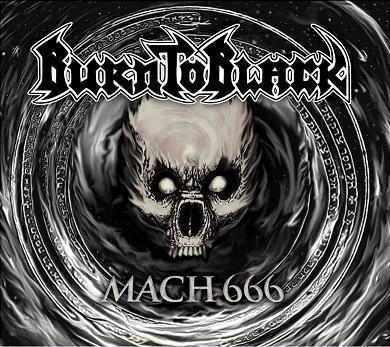
Burn to Black—Mach 666 (Urgent Music)
Toronto’s Burn To Black are here to celebrate the fact that metal is awesome. It's awesome when vocalist Rob Ouellette yells lines like “See the fuckin' violence!” or when he urges us and his bandmates along with "Let's rock! Come on!" on “The Vanishing.” Drummer Evan Johnston has the taste and judgment to know that laying it down four-on-the-floor like Phil Rudd on crack is just as awesome as your requisite death metal blasts and double kicks. Guitarists Paul Harrington and Mike Krestel have done an awesome job of honing their tone to a hyper-saturated state of serrated savagery. And bassist Sam Dunn is so convinced of metal’s awesomeness that he made a damn feature film about it. Burn to Black play a most pestilent, caustic form of thrash, with toxic traces of Swedish death, tight and speedy at times like At the Gates. As befits such enthusiastic connoisseurs of the art, their style is pure, free from niceties like keyboards and vocals that do anything but rasp and snarl in the nastiest of ways. I don't hear too much leeway in their sound, nor much to choose between the 11 tracks (plus one awesome Celtic Frost cover), but they do throw up some strong songs, like the superbly titled "Winter Rancid Skies," opener "Hellspell," and album closer "Microcosmic/Broken Lands," which delivers one of the best choruses on the album. I wouldn't mind hearing more variety in the material, with different musical shades within songs and between songs—it's not until the last half of "Microcosmic/Broken Lands" that we're granted relief from the hack & slash ripride of the previous 10 songs—but I can appreciate the excitement of a band intent on making their initial recorded statement as ferocious as humanly possible. With massive production and precise performances, the whole thing adds up to an awesome statement of “more metal than thou.” Even the title, Mach666, throws you a wink before unleashing exactly what it promises—Satan beyond the speed of sound, thrashing anything within range of the shock waves. Burn to Black have released a beer-fueled master-class in metal...and a pretty awesome debut album.

Monday, September 18, 2006


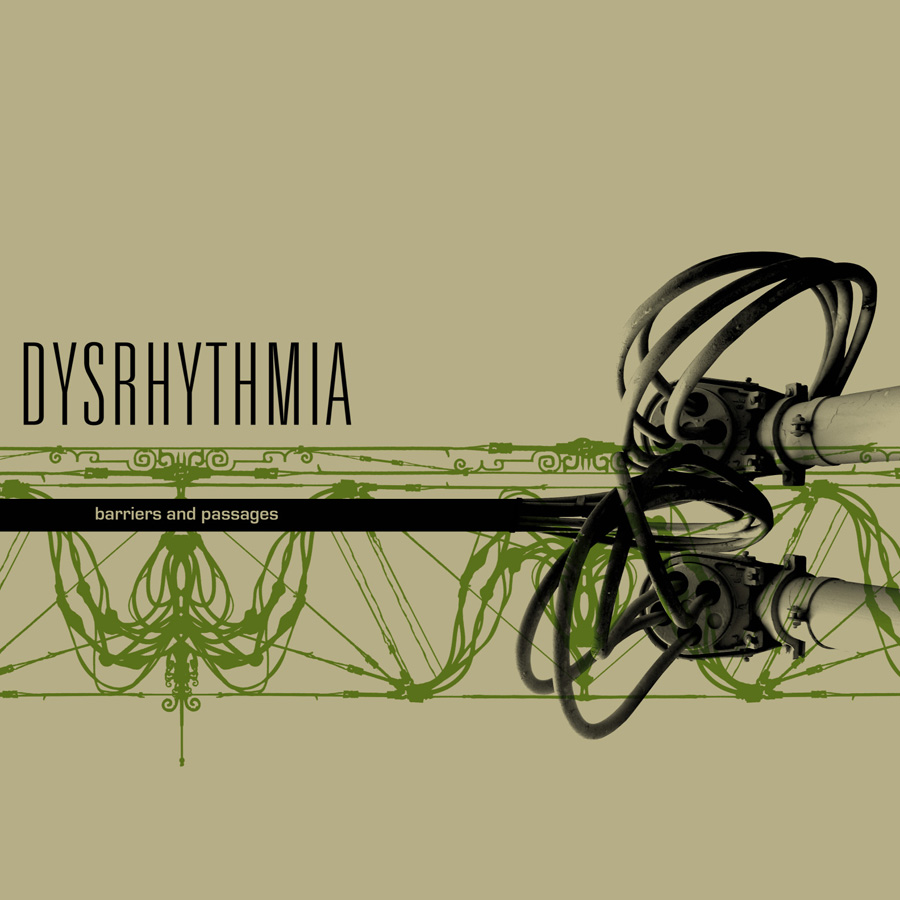
Dysrhythmia—Barriers and Passages (Relapse)
I thought Pretest, this number-crunching instrumental trio's debut for Relapse, was a bit drab, but this follow-up triumphs over it in all aspects. I don't know whether the catalyst was their new bassist, Colin Marston (also of Behold...the Arctopus) or the switch to producer Martin Bisi (who captures the action in near-pornographic detail), but they've really ramped it up here. Like Don Caballero, they're working with guitar/bass/drums in the Mule-approved tech-punk-avant-prog manner. Their playing is more ensemble-based, though, with the emphasis on punishingly tight unison passages. No instrument is emphasized over the others—the guitar spazzes out, the bass grinds away, and the drums snap-crackle-pop. Opening track "Pulsar" is a moody overture to introduce "Appeared at First," where we get a true picture of the 36-minute assault on restraint and musical politeness that awaits. The rest of the album rains down in a storm of jagged grooves and micro-sections, pieced together carefully enough to avoid the unmusical rut-digging to which lesser bands with equally advanced chops might succumb. For every "Seal/Breaker/Void"—the album's centerpiece that fuses punk/noise/postrock/black metal (!)—there's a "Kamma Niyama," which could almost be a TV theme tune, given its wickedly abrasive take on the type of hooky melodicism that Shadowy Men on a Shadowy Planet peddled. The dissonant guitar drones of "Sleep Decayer" are what Bisi's old clients Sonic Youth might sound like with a less sleepy rhythm section, while "Luminous" offers a calming ambient antidote—just guitars tolling random notes amidst echo and gentle feedback. "Will the Spirit Prevail" races to the album's finish with more breakneck action. Dysrhythmia are smashing old barriers, blasting new passages, and making towering art out of the splinters and the rubble.

Thursday, September 14, 2006

Don Caballero – World Class Listening Problem (Relapse)

Pittsburgh instrumental trio Don Caballero have been around since the early '90s, when the term "math rock" came to describe the kind of blues-free, proggy, King Crimsonic, heavy-non-metal sounds that a handful of bands (usually with a single degree of separation from Steve Albini) pursued. It was basically music made by white guys with lots of time on their hands for an audience of likeminded nerds. I latched onto this style but only ever found a handful of bands and LPs to pick up at the time. The style never died out, though, and with bands like Botch (RIP), The Wayward, and Dysrythmia steering the style towards hardcore, all-out prog, metal and/or jazz fusion, the time is right for Don Caballero to jump back into the fray with a new lineup and new album—their fifth full-length and first for Relapse.

I’d describe Don Cab’s current sound as “tense.” The instruments come together, diverge, and come together again, building often complex songs out of unison and dischord. As always, founding member Damon Che’s drums are the lead instrument. His style is massive and commanding—rolling and roiling over, under and all around whatever the rest of the band is playing. The guitars on the opening track, “mmmmm acting, I love me some good acting,” alternately squall and thud along with the rhythm section. The song also makes space for a percussion breakdown, then tightly wound sections in 5 and 3, before laying out for a loosely structured ending with layers of looped guitars. “Sure we had knives around” uses more guitar looping without become repetitive, rapidly moving from section to section during its five minutes. “And and and, he lowered the twin down” rocks hard & skronky for its entire length, as does the title track. At times the band takes a more melodic, conventionally structured turn, as on the sunny, rollicking “Palm trees in the fecking Bahamas” and “Railroad cancellation,” an easygoing tune that benefits from not being in a hurry to go anywhere. While the overall feel of the music is tense, there are a few relaxing stretches along the way. With a guitarist who manages to sound like two, a drummer who plays like three, and a bassist who wisely stays out of the way and finds his own space to work in, Don Caballero are sounding really good at the moment, and World Class Listening Problem is a powerful comeback album.

Friday, May 12, 2006


THE GATHERING
Home (The End)
It doesn’t start well. The sultry come-hither vocal melody that anchors “Shortest Day” contains more than a dash of saccharine, making one wonder if The Gathering have taken their sound too far into the realm of Cranberries-flavoured commercial pop. Happily, it’s a false alarm, as the band expertly steers the rest of the album through a brace of stellar songs interspersed with some interesting diversions. The sly melody and familiar chorus-time surge of “In Between” signal that all is well—if not better than ever—with The Gathering. By the third track, “Alone,” we hear the full potential of the band’s current direction unleashed—fluid, ingeniously arranged, and even a little menacing. Especially impressive is how they both employ and subvert verse/chorus/verse conventions by creating constant, nearly imperceptible momentum during the course of a song. The album’s highlight arrives with the fourth track, “Waking Hour,” itself highlighted by Anneke’s spine-tingling mid-song vocal excursion against a spare piano backdrop. Her voice is in full flight here, singing with a grace and control only hinted at when she belted out the tunes on Mandylion over ten years ago. The album gradually settles down via the abstract deep-space strangeness of “Fatigue,” the downcast beauty of “A Noise Severe,” and the tender “Forgotten,” only to rise to another peak with the title track, which strings the listener along with some compelling atmospheric guitar work before resolving itself in yet another standout chorus. Having lost track of The Gathering since 2000’s if_then_else, it’s great to rediscover the band working in such a confident, comfortable way. Home is the perfect place for them to be right now.

Wednesday, March 22, 2006

Woods of Ypres — Against the Seasons (Krankenhaus Records)
The five-song EP Against the Seasons was Woods of Ypres’ first foray into their world of summer black metal, a theme established by the subtitle, “Cold Winter Songs from the Dead Summer Heat.” Recorded in 2002 and released the following year, it’s now undergone a remix from producer (and current WoY bassist) Dan Hulse, who did such a great job on Wetwork’s album last year, along with classy new artwork. The music on this 30-minute EP shows a raw-yet-focused approach that formed the basis for the refinements and diversification of their superb Pursuit of the Sun and Allure of the Earth album from last year. Extremity abounds, emphasizing the blast and the rasp, while still leaving room for acoustic passages, melodic vocals and tempo shifts, sombre arpeggios mingling with fierce blasting (executed with more enthusiasm than perfection, admittedly)—the elements the band fully realized in the more varied songs on the follow-up album. The black metal influence is more pronounced here, recalling Satyricon, Immortal and Primordial—particularly the latter band’s fondness for triplet-feel tempos. I like the symmetrical running order of the tracks, with two shorter songs framing three epics. "A Meeting Place and Time" stands out for its memorable clean-sung passages, as does "Awaiting the Inevitable," which features some terrific riffs in its doomy intro and mid-song death-metal breakdown, complete with a patented Tom G. Warrior death-grunt! Great stuff. Considering that two-thirds of the band on this EP didn’t appear on Pursuit…, the sound and approach between the two releases are remarkably consistent. This is probably down to drummer/songwriter David Gold’s vision…a uniquely Canadian vision, I should add, tied intimately to our geography and the correlation between climate and emotion. (If ever a metal band could be diagnosed with S.A.D., WoY would be it.) The recording-in-progress reports for WoY III indicate that its musical direction follows this EP more closely than Pursuit…, making Against the Seasons not a curio of juvenilia like many debut releases, but a key work in the band’s young discography.