Tuesday, January 12, 2010

A Difficult 2009, 10 to 6

10. Zombi—Spirit Animal (Relapse) If Steve Moore and A. E. Paterra were a lot older and sexed up their sound with a little more disco, they could have been “big in Germany” just like Saga in the early ’80s. Their music is stern and exacting. I admire the purity of their vision and the quality of their execution. They also offer the simple pleasure of hearing two guys play their asses off. Like SUNN O))), they started with an obvious source of inspiration and moved on to define their own sound. This latest round of planetarium rock is their best yet.


9. Present—Barbaro (ma non troppo) (Ad Hoc) Although the studio half of this CD/DVD release is a bit stingy, the package as a whole is a stunner. Review here.


8. Woods of Ypres—IV: The Green Album (Practical Art) Another compelling heavy metal confessional from Ontario’s “ex-black/now-doom and anything else you want to call it" metallists. Review here.


7. Six Organs of Admittance—RTZ (Drag City) I feel like a cheat including this compilation of old and rare SOoA material, but it did come out last year and it did give me a new perspective on Ben Chasny’s remarkable art. Review here.


6. Yob—The Great Cessation (Profound Lore) Yob’s mighty comeback saw them stripping down and stretching out, feeding off their well-justified anger and crushing everything. Review here.

Saturday, January 09, 2010

A Difficult 2009, 15 to 11

15. Voivod—Infini (Sonic Unyon) While it's sad that this is the end of the road for Voivod, Infini was a strong record on which to bow out. Katorz was kind of a "proof of concept" release; it must have been an ordeal for the surviving Voivod members to bring Piggy's last riffs to fruition. On Infini the band sounds much more at ease working with their late guitarist's final recordings, and although there are a couple duds, the album as a whole is appreciably better than Katorz.


14. Gates of Slumber—Hymns of Blood and Thunder (Rise Above) Review here.


13. IQ—Frequency (InsideOut) Review here.


12. Led Bib—Sensible Shoes (Cuneiform) My wife zeroed in on this at Dr Disc in Hamilton and told me I should buy it. My wife is a genius. This London jazz-rock quintet have laid down a scorcher of a album—nothing sensible about it. Mixing infectious themes with all-out skronk, it always threatens to blow the roof off the joint.


11. The Decemberists—The Hazards of Love (Capitol) I had to live with this album for a while, but I eventually discovered that The Hazards of Love is start-to-finish great. They ratcheted up the progressive tendencies of The Crane Wife for this concept album/song cycle/rock opera/ whateverthehell. The big riffs and keyboard solos take stabs at Heep/Tull rock majesty, but fall a bit short—they're so polite. I like them as they are, though. I appreciate the intent. The songs stand together well, the reprises fall where they should, and Shara Worden's turn as The Queen is spectacular.

(None of these records make any sense together.)

Thursday, January 07, 2010

A Difficult 2009, 20 to 16

20. Litmus—Aurora (Rise Above) Space rituals for the information age. Review here.


19. Baroness—The Blue Record (Relapse) I’m not a production Nazi, but the snare sound on The Blue Record drives me nuts. Smack-smack-smack. Baroness are still a brilliant band, and The Blue Record shows them developing their songwriting and guitar harmonies to manic new heights. If Chuck (Stairway to Hell) Eddy is still obsessing over metal/disco fusion, he’d love this—it shakes and grooves like no other metal album this year. If only the backbeat didn’t grate on me so much...


18. Firebird—Grand Union (Rise Above) Bill Steer is still the coolest. Review here.


17. SUNN O)))—Monoliths and Dimensions (Southern Lord) I bought Earth 2 ’round the year punk broke, so I didn’t see much point in getting into SUNN O))) when they droned to life in 1999. The press for Monoliths and Dimensions was so persuasive, however, that I went for it the day it was released. While I can take or leave Attila Csihar’s contributions, “Big Church,” with its choir arrangements (inspired by guest guitarist Dylan Carlson of Earth), and the majestically orchestrated “Alice” took drone to new and ingenious realms. The latter was one of the best pieces of music I heard all year.


16. Sonic Youth—The Eternal (Matador) A similar case to Clutch here: a band with a string of great albums through the 2000s (Murray Street especially), switching labels (retreating from Geffen to Matador), and dropping a non-core member (Jim O’Rourke, replaced by Mark Ibold). Like Clutch, Sonic Youth just did their thing in 2009. The Eternal took a while to warm up to, but I couldn't help but feel at home with those familiar Moore/Ranaldo guitar conversations and songs like “Antenna” and Ranaldo’s kick-ass “What We Know” that rang with confidence and artistry. Funny; I won’t run out for Rush or Neil Young every time, but I’ll do it for Sonic Youth, and never regret it.

Wednesday, January 06, 2010

A Difficult 2009, 25 to 21

25. Shrinebuilder—s/t (Neurot) The advance word on the Shrinebuilder sessions (almost a year ago this week!) was that something really special had gone down between Crover, Wino, Cisneros and Kelly. The hype turns out to be reality, as Shrinebuilder delivers a perfect blend of all the participants’ bands. Sounds like everybody brought riffs to the table and put some serious thought into piecing them together. This was the holy mountain for stoner/doom fans this year.


24. Makajodama—s/t (Laser’s Edge) The archetypal “stunning debut” from this Swedish instrumental outfit that bridges Canterbury and Krautrock and post-rock (an increasingly useless label that I’m beginning to despise), creating a tasteful-yet-rambunctious sound that time travels somewhere between 1969 and 2009.


23. Clutch—Strange Cousins from the West (Weathermaker) After releasing a raft of killer albums last decade, Clutch were rewarded by having their record company go tits up. Clutch still have a full tank of gas, though. They dropped the keyboards that threatened to turn them into a jam band, especially in a live setting. Strange Cousins... is back to basics while still honing that heavy blues style they’ve pursued since Blast Tyrant. “50,000 Unstoppable Watts” should find a place in the set list from here on in.


22. Kylesa—Static Tensions (Prosthetic) Warpig had a number called “Melody With Balls,” which is a daft title (hey, it was 1970), but the phrase sums up the last Kylesa album very well. Review here.


21. Upsilon Acrux—Radian Futura (Cuneiform) I remember seeing (probably in a mid-70s vintage World Book “Science Year” volume) a picture of a web spun by a spider on LSD. That’s how I visualize Upsilon Acrux songs...at first. After many listens all the micro-sections start to flow together into a logical whole. It’s still pretty twisted logic, mind you, and I’m sure Radian Futura, with its half-hour centrepiece "Transparent Seas (Radio Edit)," will always be a challenging listen. Someday I’d like to figure it all out, but right now I treasure my job, my 6 to 7 hours of nightly sleep, eating, and being married.

Tuesday, January 05, 2010

A Difficult 2009, Part 1

2009 was full of personal trauma and anxiety, yet in the aftermath of every loss or near-loss, there was a quiet zone where I found more time than ever—or maybe I made more time—to pursue music. As always, music is the best.

One effect of the demise of Unrestrained! magazine was that I dropped off the promo gravy train. My mailbox sighed in relief. A lot of guilt lifted as well. I concentrated on writing about music that I actively sought out, researched, and acquired. Without the expectation of advance promos, I tracked release dates and awaited new albums the way I did in the years before this blog. I had fun just being a fan again.

For my year-end round-up, I’ll borrow Metal Mark’s approach and dole out my top 25 list five at a time. But first, I want to acknowledge ten albums that didn’t make the list for various reasons. They’re all excellent records, but through inattention or other factors they never became a vital part of my life for a significant stretch of the year.

35. Eagle Twin—The Unkindness of Crows (Southern Lord) Difficult jazz/sludge from Gentry Densley of Iceburn and Ascend (whom I covered in 2008). The writing and playing on this album is organic and human, but requires further study. My fault for buying it on vinyl, preventing me from listening to it at work. Throw us a download coupon, Southern Lord.


34. Katatonia—Night is the New Day (Peaceville) I didn’t find this to be the masterwork that Mikael Akerfeldt promised, but more of the same from Katatonia is never bad. The ultimate katatonia album should render me a blubbering mess; Last Fair Deal Gone Down is still the one to set the lower lip quivering.


33. Novembers Doom—Into Night's Requiem Infernal (The End) After the fantastic The Novella Reservoir, this album saw Novembers Doom holding steady with the expected mix of fist-clenching doom and forlorn ballads. Seeing them live in Calgary was a highlight of 2009.


32. Slough Feg—Ape Uprising (Cruz del Sur) I liked this much better than what I’d heard from Hardworlder. In fact it’s a gas, a good old-fashioned party record with surplus wit and style. Unfortunately I didn’t party much this year.


31. The Opium Cartel—Night Blooms (Termo) I regret that i didn’t review this properly, but I missed my window of opportunity when the sun was out this summer and this record’s sparkling pop-prog made perfect sense.


30. OM—God is Good (Drag City) There’s no space like OM. It was high time for OM to branch out a bit, and with new drummer Emil Amos on board, God is Good was the perfect chance. They were partially successful on side two, but my initial rush of discovering OM a couple years ago had worn off, leaving me to think that side one was more of the same old thing.


29. Ancestors—Of Sound Mind (Tee Pee) I’m still trying to figure out if this sprawling doom psych successor to Neptune With Fire has any tunes on it. I’m really pulling for it, though.


28. Six Organs of Admittance—Luminous Night (Drag City) It’s Ben Chasny’s fault for releasing two major Six Organs of Admittance albums this year. The first one, RTZ, grabbed all the attention back in February. This album gets played increasingly often, and its bleak songs are slowly winning me over.


27. Steven Wilson—Insurgentes (kscope) This album made a nice change from Wilson’s increasingly predictable work with Porcupine Tree, but it hasn’t had much staying power after I posted my review.


26. PJ Harvey & John Parish—A Woman a Man Walked By (Island) Finally a follow-up to Dance Hall at Louse Point and again it’s fascinating to hear PJH in collaborative mode, wringing songs of beauty, dark humour, and outright horror from Parish’s prickly guitar constructions.


Friday, December 18, 2009

Woods of Ypres—Woods 4: The Green Album (Practical Art)

Woods of Ypres do things that metal bands are not supposed to do. Head songwriter David Gold writes in the first person, but doesn't indulge in any role playing. He battles inner demons, not supernatural entities. The lyrics encompass vulnerability and longing as well as anger—the latter arises out of the former. Musically, Woods tackles several genres within a single album, which is refreshing in a time when bands rewrite the same song 10 times and call it an album.

Woods 4 includes some "Peaceville 3"-style doom, some melodic, mid-paced Katatonia/Amorphis rockers, some orchestrated piano-and-strings sections, some blasting BM and DM bits, and a couple hammer-headed sludge tunes. So although the band's PR material labels their sound as black and doom, listeners looking for an earful of one or the other will come away unfulfilled. But for those who want variety and regard scene policing with contempt, Woods have delivered another enjoyable and highly successful album.

Thematically, the album that Woods 4 most reminds me of is Marillion’s Misplaced Childhood. Both albums begin with the death of a relationship and chronicle the personal journey that follows. In Marillion’s case, vocalist Fish loses himself in backstage debauchery and in various identity crises provoked by the touring life. For David Gold, the post-breakup journey is just that: he takes an opportunity to travel abroad (“Dive into exile!” as “Dirty Window of Opportunity” puts it), and deals with isolation and regret while finding a new life in South Korea.

Musically the band covers more ground than ever. The variety of the material is necessary to sustain the listener’s interest for a 78-minute album. The sequencing of songs helps as well. There are breaks between tracks (unlike Misplaced Childhood), but after a few listens to the entire album, I started hearing the songs as a series of suites. The opening of the album is consumed with gloom and sadness, and the tempos reflect this. The doom is quite My Dying Bridal on “Everything I Touch Turns to Gold (then to coal)”, with Gold's “whoa-oh-oh”s standing in for MDB’s violin lines. The opening movement ends with “I Was Buried in Mount Pleasant Cemetery" (Gold’s favourite titling theme has a rhyming scheme) and the narrator's figurative death before he assumes a new identity as a single man in a foreign land. The most intriguing stretch of songs lies at the heart of the running order, from “Wet Leather” (the album's most immediately catchy song), “Suicide Cargoload” and “Halves and Quarters” (two brief but heavy rockers) and “You Are Here With Me (in this sequence of dreams)” a lullaby/lament with instrumentation by Musk Ox. This is where the album's depth and variety is really evident.

With all this going on, the album works it way from the personal to the universal, from the opening scene of a breakup to the closing track’s call for a tenuous truce between sexes: “Women move on. Men move on.” Tellingly, this is where the voice switching to the 2nd person, as if to impart some hard-fought wisdom to the listener. This song—"Move On! (the woman will always leave the man)"—also invokes the seasons, a nice reference to the themes from previous Woods releases.

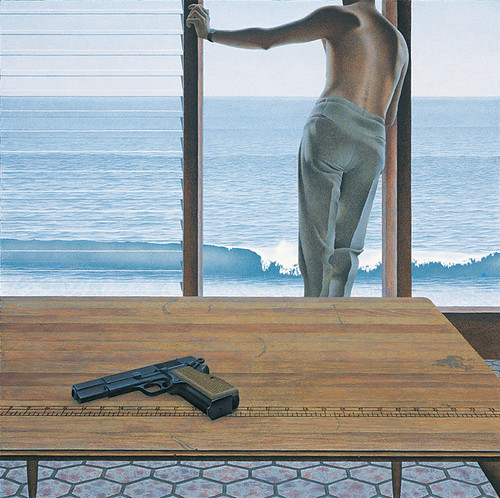
Woods of Ypres have outdone themselves with this album, and again have demonstrated that metal doesn't have to be purely a vehicle for escapism. The plain-spoken nature of Gold's lyrics might throw some people off, but for me, Gold's words and images paint vivid, precise pictures. Each song is like a heavy metal Alex Colville painting, a scene revealed in unforgiving, relentless light.

Thursday, December 10, 2009

Bedlam from Belgium

A lot of the music I listen to comes from a dark place. I’ll lap up the guttural, gut-bursting fury of Suffocation, the blood-caked emotion of Neurosis, or Deathspell Omega’s dissonant, Dantean hymns and gladly return for more. But when it comes to true Musica in Diabolus, none of them are fit to touch the grim robes of legendary Belgian chamber rock/Rock In Opposition bands Univers Zero and Present. A lot of prog bands describe graceful arcs with their music. The Belgians slash and stab, grind and jab. I have no idea how music like this gets made. Sacrifice, poverty and hunger play a large role, I’m sure...plus a buttload of rehearsal. Why doesn’t every kid who’s forced into piano lessons just flip out at age 17 and start making music like this? If I was a bitter child prodigy, with classical chops and a hate-on for mumsy and papa, that’s where I would have gone.

Univers Zero is led by drummer Daniel Denis; Present’s leader is guitarist Roger Trigaux, who was in Univers Zero for their first two albums. Each band reflects its leader’s instrument. Univers Zero’s music is abrupt and choppy, with riffs that sound like they’re based on drum rudiments. Present trolls similar dank, stony chambers, with the guitars of Roger Trigaux and his son Reginald providing additional menace. Both bands have monster drummers. In a genre where the standard was set by Christian Vander and Magma, it’s a must. Denis (who actually joined Magma briefly in the early ’70s) combines a free-flying Art Blakey and Keith Moon approach with a classical percussionist's discipline. Present’s Dave Kerman hits even harder—he’s a big fan of Gaza and other types of grind madness—yet he matches Denis’s orchestral approach in playing the entire kit at all times.

Univers Zero—Relaps: Archives 1984–1986 (Cuneiform)

Relaps collects Univers Zero live recordings from a difficult time in the band’s history, as documented in the liner notes. Although line-up changes and financial woes put the band’s existence in jeopardy, the eight tracks featured are bombastic and fierce—the sound of a band driven to survive by destroying all comers. For the sake of my nervous system, I hope I don’t hear anything more intense than the version of “The Funeral Plain” heard here. The extended ostinado solo section that sees Jean-Luc Plouvier and his demented DX7 work handing off to Michel Delory’s equally sadistic guitar solo is audio terrorism at its finest. It’s surprising to hear the audience applauding at the end, and realize that UZ hadn’t rendered the crowd into clumps of bubbling goo at Belgium’s Centre Culturel de Seraing that night. Some people evidently survived.

After this period and a final studio album (Heatwave), Denis retired the band until 1999's The Hard Quest.


Univers Zero: Evil Incarnate

Present—Barbaro (ma non troppo) (Ad Hoc)

Present took a similar path to UZ, releasing two albums in the early ‘80s before resurfacing with Certitudes in 1998. Their latest, Barbaro (ma non troppo), is a two disc set comprising three new studio recordings (44 minutes) and a DVD with nearly three hours of performances from 1994 to 2007. The new music is stunning. “Vertiges” is a 16-minute labyrinth of percussive insanity—pianist Pierre Chevalier hammers the piano like a man possessed—that builds to a couple climaxes. You might think they’ve given everything they had at the 9:30 mark, but wait, there's more to come. Chevalier’s “A Last Drop” has more of a sustained groove—albeit an off-kilter, juddering sort of groove—before it drops into a tension-building section that almost sounds pleasant and achievable by mere mortals. The final track is a little bit special in that it’s a remake of Trigaux and Denis’ “Jack the Ripper” from Univers Zero’s malevolent 1979 masterwork, Heresie. The older version was shrouded in the murk of a London fog; this new one gleams and flashes like a knife blade.

The DVD portion is just as alarming. The primary footage is well shot and edited, with the musicians’ craft as the main focus. Present in concert isn’t a heads-down noodle-fest, though. They do have a flair for the theatric. Witness the stern, gaunt figure of Roger Trigaux conducting the band through the first half of “Promenade au fond d’un Canal” like he’s casting spells. Cringe at the shirtless war-painted guy who takes centre stage to pound out time on a pipe. Thrill to Trigaux smashing his guitar at the end of “Promenade...” from a seated position, no less. Chuckle at the world’s unhappiest teenage girl sulking in the front row at the Gouveia Art Rock Festival in Portugal. Wonder at the sight of Kerman playing the drums with wooden spoons, chains, and Barbie dolls at various points. The highlight comes when the Barbie heads eventually come flying off and Kerman continues smashing the cymbals with the decapitated doll bodies. It’s official: Present are the most brutal band ever.

Friday, December 04, 2009

Guided by Voices: A Brief History, by James Greer (Black Cat)

I’d always imagined that unravelling the story of Guided by Voices would be a difficult task. Back when I was a SPIN-reading youth, before I’d heard their music, GBV’s initial appeal lay in their obscurity and the romance of their unlikely rise from the basements of Dayton. How would you get access to that? It’d be a task akin to archaeology, digging through the mountains of 4-track tapes and Bud Light empties. However, because author Jim Greer actually once played bass in GBV, he’s the man for the job.

I got into Guided By Voices with Bee Thousand and bought each new release on sight (except for Mag Earwig!, which I caught up with during their TVT Records period). I enjoyed the music without giving much thought to what was going on behind the scenes. That's where Greer heads right from the opening chapter, set backstage at the final GBV gig. With the dozens of lineup changes and the band’s indie-to-major-back-to-indie trajectory, there’s a heap of stories and intrigue—divorces, feuds, fistfights and drugs aplenty. Greer’s pursuit of the methods behind Robert Pollard’s prolific genius also provides plenty of fodder for the book.

Fittingly, this is not a straight-up chronological bio. Greer takes a scattered approach, and includes contributions (not just quotes) from Pollard’s son Bryan, Dennis Cooper, rock critic Richard Meltzer, and fuckin’ Bun E. Carlos. There is a thread of standard album-by-album rock band narrative—I almost wish there was more discussion of the music and the songs. Greer does include a chapter devoted to Pollard’s explanations of selected songs, some of which are more illuminating than others. It’s kinda refreshing to find out that some of them are just random nonsense (many songs can be boiled down to “doesn’t really mean anything.”). The stories behind certain song titles are interesting, though.

To sweeten the deal, Greer includes a discography, which even in its “selected” form takes up the last third of the book.

(Greer describes the last three GBV albums for Matador Records as “quite likely the best records of the band’s career.” I couldn’t ignore this claim, and went back to listen to them.)

Universal Truths and Cycles (2002)—This is a good record, but it’s probably the weakest of the last three Matador albums. It’s short of hits and the band sounds tired on MOR numbers like “Pretty Bombs.” “Skin Parade” has some drive, as does “Christian Animation Torch Carriers.” “Storm Vibrations” is powerful but too long. To me, “Everywhere with Helicopter” is the classic kind of GBV bopper you expect to hear. “Eureka Signs” too, with its grit and muscle and slashing chords, really invites comparisons to The Who. Where previous albums delivered the experimental, less successful tracks in minute-long bursts, here they’re lengthy and in your face with good production, like the droney “Car Language” and “From a Voice Plantation.” The last third of the album loses me. Maybe after having blown the doors off with their last TVT release Isolation Drills (a personal favourite), they had nothing left to give, and this puzzling, low-key release was their way of easing back into the indie world.

Earthquake Glue (2003)—GBV sound like they’ve found their feet again. Pollard’s collage cover art puts us at ease right away. His songs induce the characteristic GBV ecstasy: “I’ll Replace You With Machines” and “She Goes Off at Night” off the top are both brilliant. “Useless Inventions” tops them all; its mad rush recalling Husker Du. The band goes wistful on "The Best of Jill Hives," and gets proggy on "Dead Cloud" and "Mix Up the Satellite." This album touches on a number of different styles and triumphs every time.


Half Smiles of the Decomposed (2004)—In many ways this is the most conventional Guided by Voices record. Pollard avoids the song fragments and noise, and focuses on nothing but substantive, flat-out excellent songs. “Window of My World” in particular is a song for the ages. The album it most reminds me of is Mag Earwig! Pollard, as I learned from the book, was divorced and in a happy new relationship (“Tour Guide at the Winston Churchill Memorial” is about his new lady Sarah), which accounts for the general vibe of contentment. Half Smiles... saw the band making an unexpectedly graceful but satisfying exit.

Friday, November 27, 2009

Gwynbleidd—Nostalgia (BlackCurrant Music)

Nearly everything about this release is impressive. The Travis Smith-designed packaging is beautiful, featuring images of sooty, ravaged foliage that gird us for the progressive metal contained on the disc within. Gwynbleidd’s music is impeccably performed and recorded, and full of powerful, natural tones. It appears to be almost entirely self-produced too, so respect to the band for dialling in such a great sound.

There’s an elephant in the room, however, and it has a giant, swirly “O” painted on its side. No matter how hard I try, I can’t see past it. The guitar harmonies, the regular cycling of loud and soft/electric and acoustic within the lengthy compositions, the vocalist’s surging death growls when a heavy part erupts—if Opeth can be said to have a template, Gwynbleidd follow it slavishly. Their songs do flow differently than Opeth’s, but this is down to the fact that all their riffs are in 12/8 time (barring the odd innovation, as heard on “Stormcalling”), which smoothes over the many transitions in loudness and tempo. This also makes it difficult to distinguish between songs. Many micro-sections grab me when they pop up, but I’m usually hard pressed to tell where I am when I’m listening to the album straight through.

Gwynbleidd have found an enjoyable starting point with Nostalgia, but they’re clearly a little too comfortable playing this style. Now comes the tough part—they need to take what they have and tear it down and mess it up and be brave about it, so that with the next Gwynbleidd album, we’ll go, “Oh, that’s what Gwynbleidd sounds like.” They certainly have the talent to make something beautiful and unique.

Tuesday, November 17, 2009

The Pugs and Crows Band—Slum Towers (indie)

This band’s name makes me think of my neighbourhood and its healthy populations of both pugs and crows. The pugs are roly-poly and happy to be out for a walk; the crows are often ornery and will dive at your head during nesting season. In terms of temperament, The Pugs and Crows Band fall somewhere between the two creatures—neither eager to please nor randomly hostile. Their music swings gracefully between moods jaunty and despondent.

Slum Towers is the work of composer/guitarists Cole Schmidt (from Cortez the Killer, reviewed here) and Clayton Murray, along with Russell Sholberg (bass), Ben Brown (drums) and violinist Meredith Bates. The 11 instrumentals and one vocal track feature a lot of tasty playing, but the approach is clean and careful. They will not pin you against the wall with screaming solos. Each tune establishes a strong theme right off the bat.

The haunting, placid opener “’Lil Red Spiders” immediately reminds me of The Dirty Three, but that direction doesn’t return until the superb “Ballet for BC” (featuring a beautiful bowed solo from Sholberg) late in the album. The rest of the record stumbles into some exotic grottoes. Tracks like “Two Tastesless [sic] Italians” and “Ramadan” have a gypsy air that reminds me of Estradasphere without that band’s speed metal digressions. “Turducken,” one of the longer tracks, has a desert caravan feel, a waltz chorus, and a more abstract, improvised section to heave the whole thing off balance. Even at its bounciest, Slum Towers carries a sombre dignity.

The only non-instrumental is “Scarecrow Shadow,” a macabre, sepia-toned ballad that sits in the middle of the album. Sung wonderfully by Debra-Jean Creelman, I can picture it playing over the opening credits of a David Lynch movie.

The Pugs and Crows Band finds an unsettled and unsettling territory between rock and jazz—a sound that has a gritty elegance, with none of the funky elevator-music cheese that “fusion” often entails. An interesting, enjoyable new cross-breed unleashed on Vancouver's musical landscape.

Wednesday, October 28, 2009

We’re Gonna Rise Above (Some More)

Litmus—Aurora
Hawkwind are one of the great unsung influences in rock, especially from the North American perspective. Monster Magnet is the only stateside band I can think of that’s copped to their influence. Back in England, the entire “space rock” genre can be traced back to them, and Litmus are definitely carrying on Hawkwind’s tradition of blissed-out, cosmic hard rock. Aurora features the requisite pounding beats, whooshing noises and time-stretching jam interludes. Refreshingly, they also incorporate their forefathers’ passion for strong melodies and hooks. Hawkwind may have been hyper-conceptual space cadets, but they also had hits. When Litmus kick in the afterburners, as on “In the Burning Light” or “Stars” they sound like an ultra-polite Motorhead (go figure). But for every supernova there’s a cloud of cosmic dust: “Kings of Infinite Space” is a drone-based anthem, and “Ma:55°N Rift” is a scorching instrumental that fills the black hole that Porcupine Tree left when they went to a major label and moved away from their style on Signify and Stupid Dream. Very English, very fun. When on “Red Skies” the guitarist lets loose with his Keith Richards-style licks, the bass growls like an angry thing and everything else goes “whoosh!” you’d be forgiven for thinking the Mother Ship’s about to land.

The Gates of Slumber—Hymns of Blood and Thunder
This well-seasoned Indianapolis trio arrived last year with their third full-length, the loud-and-proud Conqueror on Profound Lore. Hymns of Blood and Thunder delivers more of the same, but with more intensity and better songs. TGoS play proper doom metal, as Odin intended. You know the deal: “For fans of St. Vitus, Trouble, and Black Sabbath.” Like a less dour Reverend Bizarre, their approach is untainted by death growls or double bass. Their songs breathe; the main riffs are substantive and the melodically powerful vocal lines play off of hanging guitar chords. Songwriters Karl Simon and Jason McCash provide informative notes explaining the stories behind each song, which is cool. However, you don't need any of that behind-the-scenes stuff to realize that “The Bringer of War” is totally badass. “Descent Into Madness” (based on an H.P. Lovecraft story, readers) is the epic, highlighting some new elements to their sound in the form of synths, and a David Gilmour influence, manifested by Karl Simon’s guitar solo. They lob another curveball with “The Mist in the Mourning,” a medieval/folk lament based on words that Simon wrote in a "drug-induced haze in a London hotel at 4 in the morning." True to Rise Above's roster of talent, The Gates of Slumber have style, taste, and imagination, even within the smoke-filled, sweaty, despair-ridden, resin-caked, beer-soaked confines of dooooooom.

Tuesday, October 27, 2009

We’re Gonna Rise Above

England’s Rise Above Records has long been one of my favourite labels. Proprietor Lee Dorrian has great taste in working with bands that, while not exactly being “retro”, usually embody old-school values in recording and presentation. Spanning styles from the whimsical minstrelsy of Circulus, to the musty proto-metal of Witchcraft, to the agonizing doom of Moss, Rise Above bands make records that sound live and natural.

Although the label started as a way for Dorrian to stay off the dole and release 7-inch singles by the likes of Napalm Death and SOB, it soon began to specialize in doom, via the Dark Passages compilation (left), and picking up bands like Orange Goblin, Sheavy, and Electric Wizard along the way. (See Terrorizer #177 for the full story.)

These days Rise Above releases bands representing a handful of different scenes: metal, prog, stoner rock, folk, and (as ever) doom. And whatever scene a given Rise Above band represents, you know they’re going to have that “X” factor of individuality, quirkiness and coolness that inspired Dorrian to sign them in the first place.

Rise Above releases have usually been difficult to track down in stores. A couple years ago, selected new titles got picked up for distribution via Candlelight USA. Now they appear to have a full partnership with Metal Blade for North America, making the latest Rise Above releases affordable and easy to find in mainstream places like HMV.

Over the next couple days, I’ll reviewing four Rise Above albums I’ve picked up recently.

Firebird—Grand Union
Five albums in, and Bill Steer and co. never fail to rock righteously. Grand Union is another satisfying album of power-trio blues/rock that’s beautiful in its simplicity and lack of pretension—guitar panned left, bass coming through the right, drums and vocals up the middle. The nine originals and three covers explore the usual Firebird territory, which resides in the 35-year-old parameters drawn up by Robin Trower and Humble Pie. Grand Union is a little more blatantly bluesy than 2006’s Hot Wings. For every outright rocker like “Blue Flame” (love the cowbell) and “Jack the Lad”, there’s a laid-back shuffle in the form of “Release Me” or “See the Light.” While it’s all effortlessly enjoyable, I sometimes worry about Firebird’s lack of obvious progression. Steer’s guitar playing certainly keeps improving—the slide work on “Silent Stranger,” “Release Me” and “Caledonia” is impressive—and his turn on the harmonica during a rip-roaring cover of Duster Bennett’s “Worried Mind” is very cool as well. He might mess with the formula by working with guest vocalists, or keyboards, or doing a live album of new material. Really, though, as long as Steer’s into what he’s doing and still releasing albums, I’ll take Firebird any way I can get them.

Astra—The Weirding
Man, Astra sure saw me coming. This kind of low-tech psych/prog gets me all hot and bothered. Earlier this summer I complained about Wobbler’s songwriting shortcomings. Astra have many of the same sounds at their disposal, but they deploy them much more carefully, devastating as they go. I can best describe them as a hybrid of Pink Floyd and Black Sabbath. The 15-minute title track is one of the best songs I’ve heard all year, combining pastoral vocal melodies, masses of Mellotrons, some jamming reminiscent of “Echoes,” and heavy guitar riffs. It’s Meddle meets Master of Reality, and it slays. Not all the following tracks have as much to chew on. “Silent Sleep,” for example, milks its components to create an epic when it could have been a perfectly serviceable album track in the style of “Seven Stones” by Genesis. “The River Under” plods a bit as well. “Ouroboros” is the other key track, opening with a strong theme of Goblin-esque Mellotron choirs before segueing into a space jam—kudos to the guitarist(s) (sorry I can’t ID the chap—three band members have guitar listed as their first instrument) for keeping it moving forward to its final movement, which sounds like Opeth of all things. Great ’70s-obsessed minds think alike, I guess. It’s hard to believe that Astra are from California, as The Weirding sounds like it was hatched in a Welsh forest. There’s a whiff of a creative anachronism society about it (the drums in particular sound purposely primitive), but the woody I pop every time I play this album does not lie—they're for real.

Monday, October 26, 2009

Noctis Fest, Part II

It took a while to write, but you can read my roundup of the live action at Noctis III at Hellbound.ca.

I didn't expect to find any good record stores in Calgary, but what do I know? When we went for lunch with Jenn's friend Elise on Saturday afternoon, I spotted Recordland. Aside from the name, I wasn't actually sure that this bunker-like edifice contained any records. All the windows appeared to be boarded up, and the door was one of those wire mesh-reinforced deals featuring little more than a "Come in, we're OPEN" sign. I was a bit nervous going in. Would I come out again? Were the Devil's Rejects in there?

Recordland turned out to be awesome. I found the CD section first, but ended up ignoring it once I saw the portal into the vinyl catacombs.

Suffice to say I could have spent all day in there. Fortunately, I could recall some items on my want list, so I went in pursuit of a few specific items. I found:
  • Miles Davis, Agharta
  • UFO, Force It
  • David Crosby, If Only I Could Remember My Name
  • Def Leppard, High and Dry (1984 reissue with extra tracks for my pal Shockk)
If Noctis IV happens next year, I'll have to mount an all-out assault on the place.

Monday, October 19, 2009

Dethklok, Mastodon, Converge and High on Fire, October 4, Orpheum Theatre

Not that you could tell by reading this blog, but October's been an action-packed month for me. Jenn and I spent the first weekend in Calgary, taking in the Noctis III Metal Fest and Conference. It was spectacular, and, provided the organizers (Scarab Metal Productions) didn't take a bath on the thing, I'd like to go back next year. You can read my conference report here.

We went to Portland the weekend after that to staff the Anvil Press table at Wordstock 2009. Portland was great—what I saw of it anyway. We were down in the convention center 8 hours a day, talking to people who visited our table and trying to sell some books. The latter task didn't go so well. Jenn sold a couple copies of Sugar Bush and the one Jen Currin fan we met bought a copy of The Sleep of Four Cities. Then you'd get the people who'd stand there and read Heroines or I Cut My Finger start to finish, then put down the book and walk away. Being polite Canadians, we could only smile at these tools and thank them for stopping by. We need some passive- aggressive tactics next time, like matching "We are not the Bookmobile" t-shirts or something.

Portland had some awesome record stores, two of which I found during the couple hours that Jenn let me loose on Sunday. Anthem Records was a cool hole-in-the-wall with a ton of obscure avant CD-R and cassette releases and a buttload of black metal. They had YOB t-shirts as well, which I passed on, having loaded up on metal tees in Calgary. I bought an issue of Oaken Throne—Anthem was the only place I'd ever seen it.

The nice kid at Anthem directed me to Everyday Music, which I found up past Powell's Books. Awesome place. I could have dropped a ton of money there, but I restricted myself to a few finds from the vinyl bins: Eagle Twin, The Unkindness of Crows; Web, I Spider; and Lone Star, Firing on All Six.

Between Calgary and Portland we also saw Dethklok, Mastodon, Converge and High On Fire at the grand ole Orpheum. I wouldn't put the show in my top 5 for 2009, but it was pretty good. The crowd was a little more colorful than your average metal audience: lots of young kids, parents, people in costume, and “regular” people. Despite expecting Converge to be lowest on the bill, High On Fire were first on, but they rocked as I expected. I’m sure they had a couple new songs in there. Converge were great, though a little perplexed to be playing a seated venue like this. Jacob Bannon had some sweet mic-swinging moves and probably covered a few kilometers running back and forth across the stage. The new album is out tomorrow and will blow all of us away, believe me.

Mastodon played nearly the same set as their Commodore show in the summer. They had the visuals to accompany the Crack the Skye recital, then rounded out the set with one song each from the previous three albums. We had a much better view than we had at the Commodore, which was the reason I went to this show. None of the bands used a drum riser, I suspect because the edge of the back-stage video screen was so low, and the kit would have obscured the view. I noticed Troy Sanders did some Tom Araya-style half-assed playing during his singing parts on CtS, but he came into his own on the older numbers. Their vocal mix for the first few tunes was very bad, too, like the sound guy didn’t realize there were four singers in the band. You could hear Brann OK, Troy and Brett not at all, and Bill (who sang least) was by far the loudest. Puzzling.

Dethklok put on a very slick show, consisting of animation up on the big screen with live musical accompaniment from the deliberately anonymous band (which included Mike Keneally of Beer for Dolphins, Dethklok creator Brendon Small, and Gene Hoglan). The way everything was synced up was impressive, and Small is clearly a crack musician. I'd hate to think what would happen if their click track failed, though. More than at any other metal show, improv was not an option! They played an encore with no visuals behind them, after which Small finally addressed the audience and introduced the “real” band. Gene got a big cheer from the crowd, naturally. The set lasted an hour, which was just right. I don’t feel like I have to wait six months before I’ll want to watch my Metalocalypse DVDs again.

Monday, September 28, 2009

Precious Metal (Da Capo Press)

Precious Metal—Decibel Presents the Stories Behind 25 Extreme Metal Masterpieces, Edited by Albert Mudrian
Decibel magazine has always blended snark with reverence. Columnists J. Bennett and John Darnielle poke fun at the self-seriousness of it all (they kid because they love), while the reviews often spend more time riffing on a band's name than analysing the actual music. The Decibel Hall of Fame feature provides some balance by honouring a legendary metal album (as selected by the editors) every month, dissecting its inner workings with the help of every band member who played on it. It's a brilliant hook that keeps you coming back to check out each new issue.

Precious Metal collects 25 Decibel Hall of Fame articles, arranged chronologically from Black Sabbath’s Heaven and Hell (1980) to Converge’s Jane Doe (2001). Each chapter expands a little bit on the text from the original magazine articles. I A-B'ed the Napalm Death pieces and identified 2/3 of a page of new material. The book also contains a valuable "bonus feature"—a chapter on Darkthrone’s Transilvanian Hunger, with Fenriz and Nocturno Culto holding court, snarkily. Unfortunately, the book omits the pictures of obscure, often hilarious album-related memorabilia that graced the original magazine layouts. These wouldn’t have reproduced well on the book's paper stock, and colour plates would probaby have been too expensive. All the more reason to buy the magazine every month.

The 25 albums cross all genres from sludge (Eyehategod) to grindcore (Napalm Death) to death (Morbid Angel) to black (Emperor) to post-everything hardcore (Botch). Sometimes Decibel's choices are ingenious—the story behind Sleep’s epic death knell Jerusalem, for example, makes for a fascinating read. Even if you are not a fan of a particular album, the stories surrounding them are entertaining enough to keep you reading. It’s a wonder a lot of these albums ever got completed, considering they were often helmed by impoverished, infighting, drug-addled fuckups. Sometimes the articles afford fascinating insight into band politics, such as when ex-members of bands are allowed to say their piece (Cannibal Corpse's Bob Rusay or Brant Bjork of Kyuss, for example).

The only chapter that lacks any intrigue is the one on Meshuggah’s Destroy Erase Improve. Influential the album might be, but the Swedes have little to say for themselves, repeatedly shooting down Kevin Stewart-Panko’s questions and offering scant insight themselves. I would have jettisoned it in favour of another tech-death landmark, Athiest’s Unquestionable Presence (published in the October 2005 issue), which has an infinitely more compelling story behind it.

Heavy metal is turning 40 right about now, and what I'd classify as "extreme" metal is turning 25. There's definitely a lot of history to explore. Now that that history is starting to recycle itself, Precious Metal provides a chance to delve into the music before it went retro, when bands were stumbling into something truly special, even if they were ignored or derided at the time. Time offers perspective, and this book takes full advantage of that.

Wednesday, September 23, 2009

YOB—The Great Cessation (Profound Lore)

Mike Scheidt and his latest YOB mob (old drummer Travis Foster and new bassist Aaron Rieseberg) have come roaring back to life after Scheidt’s disastrous turn with Middian, the project he started after folding YOB. Middian released the fine Age Eternal album, then were quickly sued out of existence by a band who owned nearly the same name. To add insult to injury, Middian were designated as “untouchables” and dropped by an unhelpful Metal Blade Records. Considering what Scheidt has been through, it’s tempting to hear the new YOB album as a prolonged howl of anguish. However, The Great Cessation is not mere catharsis; it’s a defiant and triumphant continuation of where YOB left off with 2005’s The Unreal Never Lived. America’s finest doom act is back, and stomping balls. As guitarist and vocalist, Scheidt holds the keys to YOB’s sound. He’s always been a tasteful guitarist, even when pounding out waves of sludge cranked up beyond 11. Engineer/co-producer Sanford Parker knows how to record this sort of thing. The guitar tracks are massive, and Scheidt has more than just a few powerchords in his guitar-senal. He hits all six strings, sending you whirling helplessly in a tornado of frequencies. “Burning the Altar” is a thundering opener, full of YOB trademarks such as Scheidt’s alternating high-pitched/monster growl vocals, sluggish pacing, and an epic length that encompasses a Middle-Eastern-flavoured interlude and a squalling guitar solo to take us out. “The Lie That is Sin” is melodic and surging, demonstrating the power of control and restraint. The only track that resists enjoyment is “Silence of Heaven,” a cauldron of torment that divides the album in half. The layers of hellacious vocals overpower the music’s grinding doom, throwing the balance off. I couldn’t make a breakthrough on this one; it doth not rock. The 20-minute title track, the best song on here, is perfectly paced and perfectly placedas an album closer. It opens in an archetypal post-rock style, a desolate crawl with murmured vocals. As a song, it flows perfectly, never dragging, expertly assembling a few crushing riffs, while avoiding extraneous repetition or digressions. On this track you can hear YOB’s music getting leaner and more holistic; the joins becoming more difficult to discern. Scheidt’s portentous strumming conveys immense melancholy, as do the lyrics: “Will we ever see a time without cause, when we see what we know never was?” This kind of wistfulness in music and lyrics elevates YOB above other Sabbath-worshipping doom acts. YOB could cover “Cortez the Killer” as credibly as “Hand of Doom.”

Monday, September 21, 2009

Record labels

I'm sure this is a pitiful effort compared to the work of true obsessives, but here is a gallery of some of the more interesting labels from my record collection.

Thursday, September 03, 2009

Six Organs of Admittance—RTZ (Drag City)

Ben Chasny’s folk/psych project rounds up some rare split and limited edition releases on this sprawling double CD/triple LP release. Recorded at home on a Tascam 424 four-track—the title refers to the unit's RTZ (“Return to Zero”) button—the five epic “segments” showcase the more mystical, murky side of SOoA. None of them are in a hurry to get anywhere; each explores a becalmed and forlorn sound-space while wandering into some weird nooks and crannies along the way. With just four tracks and a few guitars Chasny creates some impressive music. It's often sparse, as his recording methods have dictated, but it's never in any danger of becoming uninvolving. “Warm Earth, Which I’ve Been Told” embraces stasis, with a quavering organ drone supporting a variety of clanging string sounds, the whole thing bookended by a mournful guitar figure and chanting. Bleakest number here? On “You Can Always See The Sun,” Chasny’s intricate playing is offset by a looming drone of distortion. “Punish the Chasm With Wings” offers the most contrast. A low, prolonged hum threatens a cacophony, which arrives with an electric guitar spazzout overtop some frantic acoustic guitar and primitive drumming, which is in turn replaced by the same low hum. It's like scanning a radio dial exclusively occupied by weird underground radio stations, for whom Ummagumma and First Utterance are the foundation for all music. Despite originating between 1998 and 2003, the pieces on RTZ are remarkably cohesive, fitting together to form an audio mural of beautiful desolation, to be listened to with lights off and contemplated like an ultra-malevolent Wyndham Hill album. I don't know if Chasny chose these pieces wisely or simply had them as his only non-album tracks, but they work well together. Wallowing in ramshackle beauty and noble loneliness, RTZ is a unique and important entry in the Six Organs of Admittance saga.

Monday, August 31, 2009

Six Organs of Forbidden Woods

Wherein I round up reviews of recent shows. It’s been a busy summer for gigs, almost as relentless as the heat that pounded our pale Pacific Northwest hides for a couple weeks in July and August.

Six Organs of Admittance, with The Intelligence and Master Musicians of Bukkake, August 20 at The Biltmore
This was quite a different Six Organs of Admittance show to the one a few years ago at the Media Club, where Ben Chasny and band promoted The Sun Awakens with a demanding, aggressive set. He took a folkier approach for this show, playing acoustic guitar throughout, supported by another guitarist, an occasional synth player, and, for a few songs, a larger cast drawn from openers Master Musicians of Bukkake. Chasny’s modest demeanour contrasts with his monstrously dexterous guitar playing, taking the finger picking and open tunings from early '60s British folkies like Bert Jansch and launching them into the psychedelic fringes (just as his other band, Comets on Fire, does with garage rock). He must have played mostly new material because I didn’t recognise a lot of it. An atmosphere of quiet devastation prevailed, highlighted by a stirring version of “Strangled Road” from Shelter in the Ash. Not that the show was a downer by any means. Music appears to effortlessly emanate from Chasny's fingers, and it's a thrill just to be present while it happens.

Prior to Six Organs of Admittance, the two boys and two girls who make up The Intelligence delivered a nice surprise in the form of a peppy set of post-punk inspired pop. Think Joy Division, Buzzcocks, Gang of Four. Their punchy songs helped ground the gig to this earthly realm, positioned as they were before Six Organs and after a fascinating ritual performed by The Master Musicians of Bukkake. As my friend remarked after the Master Musicians' set, “I wouldn’t even know how to describe what that was.” To take my own stab at a description, MMoB resembled beekeeping monks playing Asian-tinged drone in dry-ice fog. Recommended if you like: Secret Chiefs 3, SUNN O))) and Popul Vuh.

Woods of Ypres, with Trollband and Torrential Pain, August 24 at the Cobalt
Ontario’s Woods of Ypres have put in some serious mileage this summer, with a Western Canadian tour that took them from Sault St. Marie out to Victoria and back. I had high hopes for their Vancouver debut, but harboured some nagging dread about what might happen to them in this cesspool surrounded by mountains. Please, Vancouver, I thought, don’t be too sketchy—just let them play a good show. After a fun if over-excited performance by local folk metallers Trollband, Woods of Ypres took the stage in front of a decent-sized crowd and started raging immediately—so intensely that bassist Shane Madden broke a string and had to battle through the bulk of the song. The rest of the band sounded great, and were set to dominate once they’d procured a replacement bass. “Your Ontario Town is a Burial Ground” was next, surprisingly early in the set for such a stadium-sized, encore-ready song.

Although most of the crowd was loving it, one or two dudes were clearly not, glaring at the band and throwing the occasional middle finger. Perhaps they’d come expecting to see some other band called Woods of Ypres. Maybe the Woods guys—unpretentious, regular guys—weren’t putting across a grim enough image for a black/doom metal band.

While I was taking in this scene, my wife took an odd turn and I followed her out of the club to get some fresh air and make sure she was OK. I hailed a cab for her, which stopped a little past the throng out on the sidewalk. As I got her bundled into the back seat, I heard a “smash! smash! smash!” behind me. My wife shut the door and the cab took off but quick. I turned around to see the Woods of Ypres van with its front windshield smashed in and two dudes—the same guys having a lousy time inside—rushing across Main Street towards the Skytrain. One of them turned back towards us and said, “That isn’t black metal!”

I reentered the club and watched the rest of Woods’ set in a completely bewildered, increasingly sad state of mind. Woods were incredible, but I couldn’t enjoy the show. I was just embarrassed for this city and sorry for the band, who wouldn’t even be able to drive to their next stop all because of some elitist asshats and their infantile, cretinous attitudes and actions.

Forbidden, with Gross Misconduct and Magnus Rising, August 26 at The Bourbon
I was never a Forbidden fan, but my friend Smash, whose taste in thrash I trust implicitly, gave me the opportunity to go. After the miserable vibe of the previous show, some good old thrash would be the perfect tonic.

Magnus Rising had plenty of groove and grunge, but their material is rather ill-defined at the moment. It sounds like they’re taking cues from Soundgarden and Kyuss without capturing either of those bands’ flair for variety and quirkiness.

Seasoned deathsters Gross Misconduct were solid as ever with their Death and Morbid Angel-tinged attack. They're comfortable enough on stage to banter aimably between songs while being deadly serious when in full flight. Wicked stuff.

Forbidden carried on in a similar vein, laying down some ferocious thrash and engaging the mid-size crowd with amusing remarks, including a tale of getting grilled as potential "undesirables" at the Canadian border only to find themselves driving through the most "undesirable" part of Vancouver on their way to the club. As vocalist Russ Anderson put it, "And they didn't want to let US into their country?"

New drummer Mark Hernandez was undoubtedly the star of the show—his crisp, hard-hitting attack was a marvel of precision and stamina—but the rest of the band acquitted themselves well, and if the new song "Adapt or Die" is indicative of the rest of their new material, Forbidden should pick up enough momentum to be playing to crowds of thrash-metal zealots for a long time to come.

Thursday, August 20, 2009

Down with Voivod, Danava and Weedeater, August 10 at the Commodore

Superfan Phil Anselmo made sure he brought along some interesting bands on the Canadian leg of the Down tour. The four band bill started efficiently at 8:00. I arrived in time to catch a few numbers from Weedeater, who played dire, overdistorted sludge with some valiant attempts at power trio jamming that were lost in the low frequency morass. Bands like this are always best when riffing in unison, which is what they did on their last song, sounding powerful instead of hobbled...but it was too late.

Danava, another trio, were more of a players’ band, laying down some lengthy jams with plenty of soloing. The playing was tight and full of proggy digressions, and the vocals were refreshingly vocal-like. They were fun to watch but the tunage generally went in one ear and out the other. After announcing a special guest would be joining them for the next number, a hooded figure with a guitar entered stage left—the night’s first Phil Anselmo sighting! The crowd surged, then tapered off once everyone realized that the Down frontman’s axework was inaudible.

The bands thus far had been playing under a banner bearing the Killing Technology-era Voivod logo. It was now time to put the prop to good use. Considering that Voivod’s first visit to Vancouver was on the 1990 Nothingface tour headlining over Soundgarden and Prong—in this very venue—they had nothing to prove in terms of their status as legends. They did have everything to prove in terms of being a viable band without the singular talent of Piggy on guitar and honouring their legacy. The unmistakable surging tritone introduction to “Voivod” set the mood. Expectations took a nosedive when the song turned into a messy soundcheck-in-progress, with no snare drum, vocals cutting in and out, Snake glaring at the soundman and pointing furiously at the monitors. Thank the cosmos that it all came good for “The Unknown Knows” and the rest of the set, which featured just about every Blacky-era “hit” (for Blacky had returned, playing the same bass he tortured back in the Nothingface days) plus “Global Warning” from Infini. With the set focusing on ’84 to ‘92 material (some of the best, maddest metal songs ever written), the gig was pretty much a dream fulfilled for fans. Angel Rat’s “The Prow” was a personal highlight, while the most unexpected selection was “Overreaction,” a deep cut from Killing Technology. Martyr’s Daniel Mongrain did a remarkable job on guitar, replicating Piggy’s sounds and tones with the touch of a true acolyte. Anselmo, displaying a stage-hopping bonhomie worthy of Ron Wood, joined Snake for a duet on “Nothingface.” With a triumphant charge through “Astronomy Domine,” they were done. Having brought Piggy’s final recordings to fruition on Infini, it’s impossible to say where Voivod may go next, but on this night they gave Vancouver’s chapter of the Iron Gang something to remember forever.

Down were all good things. Not being familiar with their discography, I can’t comment on the quality of the setlist. It was, however, interesting to observe and compare the crowd to the throng that came out to a similarly packed Clutch gig a couple weeks before. Where do all these people come from? Clutch attracts a diverse array of people, from outright metalheads to dreadlocked ‘n’ tiedyed types, to Tim from Sales...all hell bent on partying down. The Down crowd is more burly, buzz-cut, and mosh-crazy. Paradoxically, the level of testosterone was a little lower at the Down show, due to the number of ladies in attendance. Phil and Pepper can’t half pull them. Both shows and both crowds were proof that good old hard rock and metal that translates well live (unlike most newfangled subgenres) are still a big draw. Good riffs played through a wall of amplifiers will always bring the faithful out of hiding.

Wednesday, August 05, 2009

Worlds Away: Voivod and the Art of Michel Langevin (Spider Publishing)


The fabled Michel “Away” Langevin art book has arrived. The iconic illustrator and Voivod drummer/conceptualist has long promised a collection of his visual work, but the delays in completing the project are completely understandable—Voivod’s career has been stranger than fiction these last five years. I'm happy to report that Spider Publishing and Martin Popoff have done an excellent job with this satisfying slab of a book.

“When I think of metal album covers I think of Voivod and Michel’s art,” says Dave Grohl. Dave and I have something in common. I've always considered heavy metal as music from another plane—a bleak, brutal alternate reality I like to visit, then clamber back to my comfortable, boring life. Langevin’s art (along with Giger, Dan Seagrave and perhaps a couple others) was a wormhole to lead you down into that dangerous, deafening dimension. I can honestly say I bought War and Pain on the strength of its cover art, though I'll admit that Voivod's status as one of Canada’s first thrash metal bands and their legendary bad review in Kerrang! also piqued my interest prior to the album showing up at A&B Sound. With its red-and-black palette, rough approximation of perspective, and visible canvas texture, War and Pain's album art exuded an otherness that was borne out by the crusty punk-metal lunacy of the music itself. Subsequent albums perfected the sound-vision symbiosis. The pulverizing momentum of RRRĂ–Ă–Ă–AAARRR was captured by the Voivod-as-Tarkus-tank cover image. The demented mutant Voivod in space depicted on Killing Technology represented the science-gone-mad theme of the album. Voivod were thrash metal’s premier conceptualists, a perception immensely bolstered by Langevin’s art.

The book traces Away’s style from his earliest Metal Hurlant-inspired alien doodles to his first real painting (a bleak landscape that could have worked as an early Ulver cover), through all his Voivod designs, to his more recent commissions (Probot, for example). Martin Popoff, a painter himself, devotes chapters to each Voivod album. As it turns out, Langevin's style and techniques expanded as he tackled each album cover—the oil and acrylic paintings of first three albums, the airbrushed Dimension Hatröss and the Amiga-powered computer art of Nothingface. The book features of hundreds of sketches, doodles and paintings, all lovingly reproduced. The album covers look particularly vibrant.

The book’s aesthetics would have benefitted from a more sympathetic typeface. Langevin isn't really a Times New Roman kinda guy. Mimicking the look of Langevin’s beloved OMNI magazine might have been a nice touch. The lack of captions (other than labelling certain illustrations by year) is sometimes irritating, especially when the text refers to a work that sends you rifling back through the pages in search of it. As well, Popoff lets his voice slip at points where Q & A sessions suddenly break out in the midst of a third-person narrative. As is common with rock books, a thorough copyedit would have caught a couple clangers.

However, it’s Popoff’s archive of interview tapes that makes Worlds Away much more than a catalogue of one man's drawings. This is no less than the definitive story of Voivod, told through Langevin’s art and his bandmates’ words. Snake, Piggy, Blacky, Eric Forrest and Jason Newsted are all accounted for, giving forth on Langevin’s talents as well as Voivod’s fluctuating fortunes over the past 25 years. If the narrative stumbles and digresses a little, at least I can’t dispute that I learned a lot about one of my favourite bands. It’s an inspiring story, and Popoff doesn’t blow his chance at telling it through the work and words of Langevin, an inspiring artist in his own right.